If you want to write essays that achieve Band 6 results in HSC English, start where the markers start: the syllabus and the marking criteria.
Every Paper 2 question is designed to assess specific syllabus outcomes and skills. The marking guidelines consistently reward students who demonstrate a strong understanding of:
- ideas and concepts within the module
- context, language and form
- well-selected textual evidence
- thoughtful analysis and evaluation
- an insightful and sustained response to the question.
The students who perform best understand exactly what the module is asking them to do and can adapt their knowledge to any question.
Step 1: KNOW WHAT YOUR MODULE IS ASSESSING
Each module has its own focus and expectations.
Common Module: Texts and Human Experiences: You are expected to analyse how texts represent individual and collective human experiences and explore the anomalies, paradoxes and inconsistencies of human behaviour.
Module A: Textual Conversations: You need to evaluate the textual connections between two prescribed texts and understand how context, ideas, and language shape these connections.
Module B: Critical Study of Literature: You are required to develop an informed and personal interpretation of your text and demonstrate an understanding of how meaning is created.
Module C: The Craft of Writing: You must compose purposeful and engaging pieces of writing and demonstrate control of language, structure and form.
Understanding these expectations gives your essay a clear direction before you even begin planning.
Step 2: Use the Key Verbs in the Rubric
The syllabus and marking criteria use verbs very deliberately. These verbs tell you exactly what the marker wants to see.
Analyse: Break down how meaning is created through language, form and structure.
Explain: Show how or why something occurs.
Evaluate: Make a judgement about significance, effectiveness or value.
Compare: Explore similarities and differences while discussing their significance.
Represent: Show how ideas, experiences and perspectives are constructed in texts.

Many students know their texts well but lose marks because they don’t respond to the specific verb in the question.
Step 3: Build a Thesis That Reflects the Module
Your thesis should do more than answer the question. It should also reflect the central concerns of the module.
A weak thesis:
The text shows human experiences through different techniques.
A stronger thesis:
Through fragmented narrative structure and recurring symbolism, the text represents collective trauma as both isolating and unifying, revealing how shared suffering shapes human identity.
The second thesis:
- addresses the module concept
- identifies techniques
- makes an argument
- opens up avenues for analysis
- gives your essay direction
Step 4: Choose Evidence Strategically
High-performing essays don’t simply include lots of quotes. They use evidence purposefully. Before selecting evidence, ask yourself:
- Does this quote help answer the question?
- Does it support my thesis?
- Does it allow me to discuss language, form or structure?
- Does it help me engage with the module’s key ideas?
A smaller number of highly flexible quotes is often more effective than trying to memorise dozens of examples.
As a guide, aim for approximately 8–12 versatile quotes for longer texts. The goal is depth of understanding, not quantity.

Step 5: Structure Paragraphs & YOUR ESSAYS
Strong paragraphs:
- Establish an argument.
- Introduce relevant evidence.
- Analyse how meaning is created.
- Evaluate why this idea matters.
- Link back to the question and thesis.
Markers reward essays that demonstrate sustained and insightful thinking with a clear structure. Every paragraph should contribute something meaningful to your argument. HSC CoWorks students using the Essay Building Template (EBT) to develop a strong structure that can respond to any essay question.

Step 6: Understand What a Band 6 Actually Looks Like
Sophistication comes from the quality of your thinking, not from using unnecessarily complicated words.
The Paper 2 marking guidelines consistently reward students who:
- address the question directly
- demonstrate a well-informed understanding of ideas, context, language and form
- use detailed and well-selected textual references
- make thoughtful and purposeful judgements
- compose a sustained and insightful response.
Clear, precise writing almost always outperforms essays filled with memorised jargon.
Step 7: Prepare for Adaptation, Not Memorisation
Questions change every year, but the module expectations remain consistent.
If your preparation is built around:
- module concepts
- syllabus outcomes
- flexible evidence
- strong thesis ideas
then you can adapt confidently to almost any question.
Students who memorise essays often struggle when a question takes an unexpected angle. Students who understand their module can reshape their ideas and respond effectively under exam conditions.
Step 8: Build a Trial Exam Preparation Timeline
- 6 weeks before trials: Finalise your understanding of the syllabus outcomes for each module and complete quote banks organised by outcome and build draft thesis statements.
- 4 weeks before trials: Write and receive feedback on full practice essays for each module
- 2 weeks before trials: Practice adapting your plans to unseen questions under timed conditions.
- Final week: Refine your ideas, review feedback and focus on confidence and execution.

Common FAQS for Band 6 English Essays
How many quotes should I prepare for each HSC English module?
Aim for 8-12 well-analysed quotes per text, organised by syllabus outcome. Quality matters more than quantity. You need quotes you can analyse deeply.
Should I write different essay plans for trials and the final HSC?
Your core syllabus based approach stays the same, but you should refine your plans based on marker feedback from trials. Use trial results to identify gaps in your understanding or weak sections in your argument. HSC CoWorks markers give specific feedback to help you strengthen these areas before the final exam.
How do I know if my thesis addresses the syllabus outcomes?
Check your thesis against the module outcomes directly. Does your thesis include the key concepts (e.g., “human experiences,” “textual conversations,” “critical analysis”)? Does it signal what you’ll analyse, evaluate, or compare? If your thesis doesn’t connect to the outcome’s language and purpose, revise it. Remember to get feedback regularly from your teacher and HSC CoWorks markers around your thesis before attempting to respond to full essays.
What if my exam question doesn't match any of my prepared plans?
If you’ve built your plans around syllabus outcomes, you can adapt. Identify which outcome the question targets, select relevant evidence from your quote bank, and adjust your thesis to address the question’s specific angle. Practice this skill before you enter the exam room so it becomes automatic under pressure.
We’ve created a FREE 40-Day Study Planner to help you stay organised, track your progress and make every day count.
Download your free planner via the link below.
More from the Blog…

What to Do the Day Before an Exam: HSC Study Tips for the Final 24 Hours
You've spent months preparing for your HSC exams. Now, with just 24 hours to go, what's the best use of your time? Should you keep studying? Complete another practice paper? Memorise more content? Or put the books away and relax? The answer depends on how well you've...

How HSC CoWorks Turns Daily Practice Into Exam-Day Confidence
The HSC is a year-long marathon of content. And as every student eventually discovers: cramming doesn’t work. Research on how memory works is clear. Without the right kind of practice, students forget most of what they study within days, which is why so many feel...
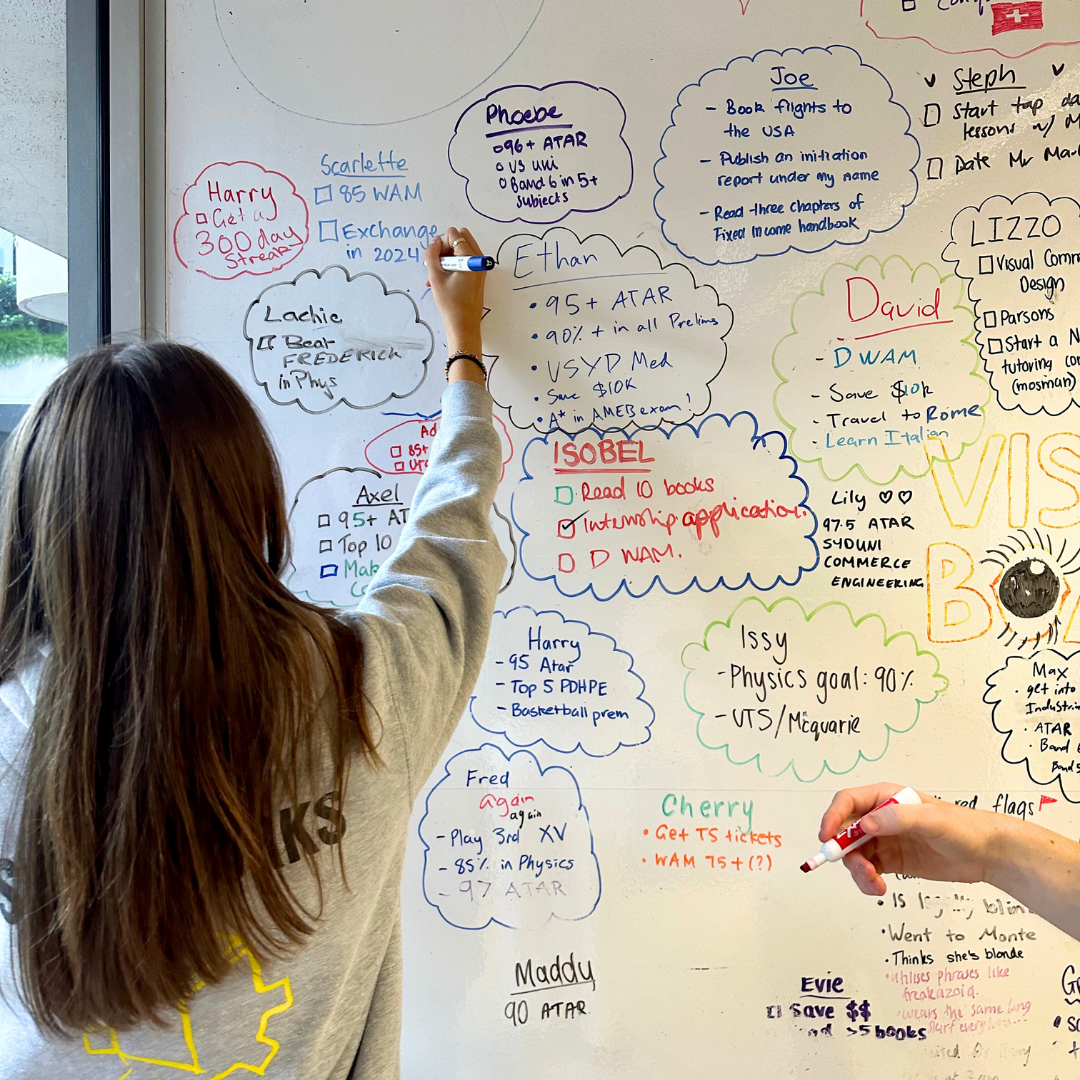

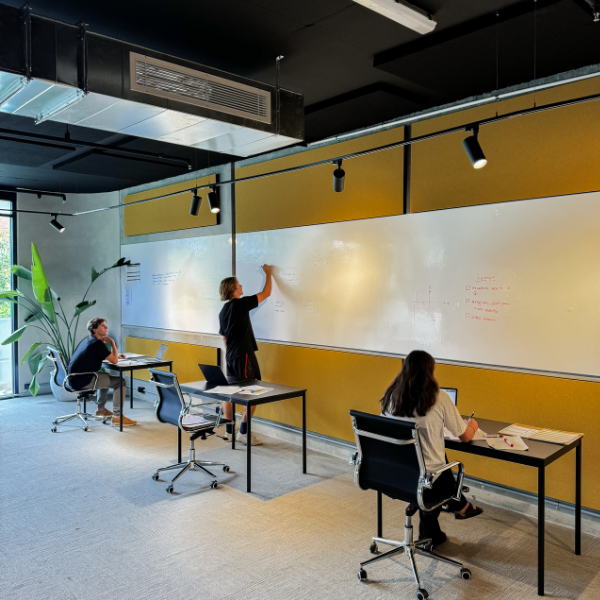

The HSC CoWorks program is designed to cultivate skills that extend far beyond the HSC, setting you on a trajectory for success in both your HSC and life after school. Develop critical thinking, time management, and resilience that lasts a lifetime.
We liken the challenge of the HSC to climbing a mountain, Mount HSC©, and through the consistent application of key behaviours all the way to the top of the mountain students will conquer their Mount HSC.