There are just a few weeks until Year 11 final exams begin and that might feel like plenty of time, but the final weeks before exams disappear quickly. Between school, assignments, sport, work and everything else going on, it’s easy to keep telling yourself you’ll start exam training tomorrow.
However the key now is to move away from simply studying and start training for your exams.
The Goal
Your goal over the next two weeks is NOT to spend every spare hour studying. It is also not the time to spend writing and re-writing notes and flashcards. This is the time to make sure that your studying is focused on the actions most likely to improve your exam performance.
This includes;
- Identifying the topics where marks are most at risk.
- Strengthening your recall of key content.
- Practice applying your knowledge to exam style questions.
- Get comfortable working under time pressure.
- Learn from mistakes before you make them in the exam room.
Here are four steps to make it count.
STEP 1: KNOW WHERE YOU STAND
Before you start studying, work out where your time is actually needed.
For each subject, review the topics that will be examined and ask yourself:
If I was tested on this tomorrow, how confident would I feel in each of these topics? Sort your topics into three categories:
GREEN: I know this well.
AMBER: I mostly know it, but need more practice.
RED: I’m not confident and need help.

Your RED and AMBER areas should become your priority.
Many students spend too much time revising topics they already know because it feels good to get questions right.
But with only two weeks to go, your biggest opportunity for improvement is in the areas you’re currently avoiding.
A simple rule:
Spend more time on your weaknesses than your strengths.
STEP 2: RECALL, RECALL, RECALL
Once you know what needs attention, start strengthening your ability to recall information without your notes. This is your foundational knowledge and it is crucial that you feel confident with it.
Reading notes, highlighting textbooks and watching videos (passive recall) can help you understand content but they don’t necessarily prove that you’ll be able to produce that information in an exam (active recall).
Try:
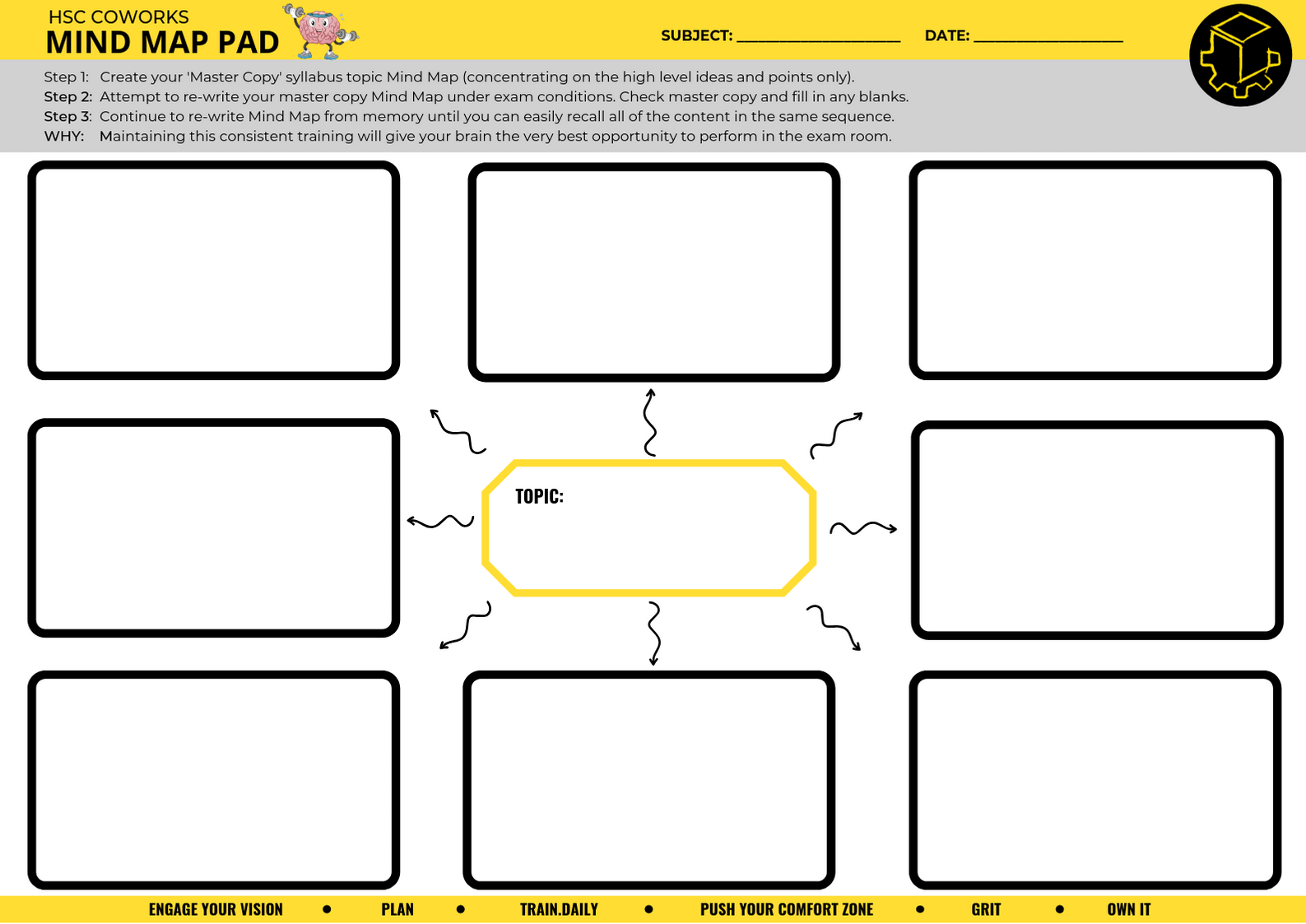
- Recreating a Mind Map from memory of the key points.
- Testing yourself with flashcards.
- Recalling formulas and definitions.
- Writing essay plans from memory.
- Explaining a concept out loud without referring to your notes.
A simple rule:
Each attempt strengthens your ability to retrieve that information when you need it.
STEP 3: START EXAM TRAINING NOW
Don’t wait until you feel like you know everything before attempting exam questions. You might never start if that was the case!
Exam training is one of the best ways to discover what you know, what you don’t know and where you’re losing marks.
English
- Essay plans
- Timed paragraphs
- Short-answer questions
- Full responses

Mathematics
- Mixed-topic question sets
- Difficult questions from weaker topics
- Timed sections
- Questions completed without referring to worked solutions
Science
- Extended responses
- Data analysis
- Application-style questions
Humanities
- Source analysis
- Essay plans
- Extended responses
- Timed writing
A simple rule:
Start using a stopwatch because your exams aren’t just testing: “Do you know it?” They’re testing: “Can you produce it accurately, under pressure, in the time available?”
That’s a skill and skills can only improve through training.
STEP 4: PRACTIcE – GET FEEDBACK – IMPROVE
Completing lots of questions isn’t enough. The improvement happens when you work out why you lost marks and what you’re going to do differently next time.
Every time you complete an exam-training task:
1. PRACTICE
Attempt the question without relying on your notes.
2. GET FEEDBACK
Mark it carefully, compare it with the marking criteria or ask a teacher or marker for feedback.
3. IDENTIFY THE GAP
Was it content knowledge? Structure? Timing? Not answering the question? A careless mistake?
4. GO AGAIN
Correct it, rewrite it or attempt another similar question.
A simple rule:
Mistakes are incredibly valuable because every mistake you identify now is one you have the opportunity to avoid in the exam room.
Throughout the next two weeks, continue to prioritise sleep, exercise, breaks and nutrition as well. It can be tempting to sacrifice these things as exams approach, but a tired brain doesn’t perform well.
Start now and make the next couple of weeks count… Focus on what you can control, and know that every focused study session addressing the above steps is supporting you become more prepared and confident ahead of exams.
These exams aren’t just about finishing Year 11 strongly. They’re also a final opportunity to develop the study habits, exam skills and mindset you’ll take with you into Year 12!
More from the Blog…

What to Do the Day Before an Exam: HSC Study Tips for the Final 24 Hours
You've spent months preparing for your HSC exams. Now, with just 24 hours to go, what's the best use of your time? Should you keep studying? Complete another practice paper? Memorise more content? Or put the books away and relax? The answer depends on how well you've...
How HSC CoWorks Turns Daily Practice Into Exam-Day Confidence
The HSC is a year-long marathon of content. And as every student eventually discovers: cramming doesn’t work. Research on how memory works is clear. Without the right kind of practice, students forget most of what they study within days, which is why so many feel...

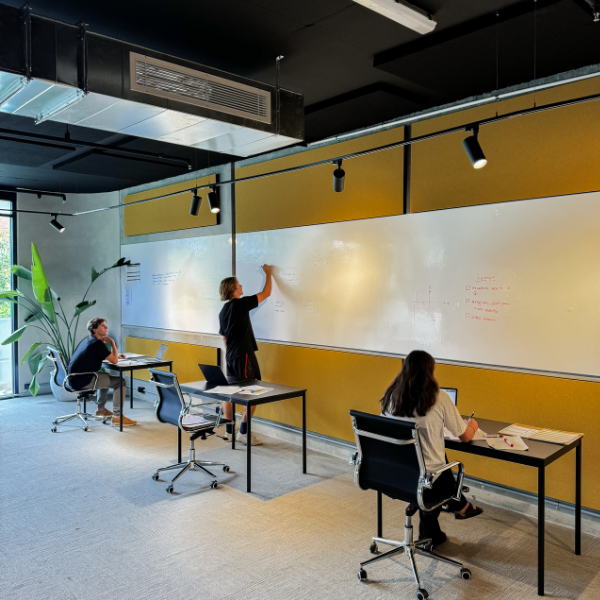

The HSC CoWorks program is designed to cultivate skills that extend far beyond the HSC, setting you on a trajectory for success in both your HSC and life after school. Develop critical thinking, time management, and resilience that lasts a lifetime.
We liken the challenge of the HSC to climbing a mountain, Mount HSC©, and through the consistent application of key behaviours all the way to the top of the mountain students will conquer their Mount HSC.