If you’re staring at your to-do list, feeling like there’s no way you can get everything done before your next set of exams, you’re not alone. This is the time of year when HSC students start feeling the pressure.
The good news? You don’t need to do everything—just the right things. Instead of panicking or avoiding the work (which only makes things worse), let’s go step by step and take back control of your HSC study.
Now that students are almost 50% of the way through their HSC Year, read our top 4 tips for taking back or maintaining control.
HSC COWORKS’ TOP TIPS TO TAKE BACK CONTROL
1. Accept That FEELING OverwhelmED is Normal—But You Can Beat It
First, let’s acknowledge the reality: the HSC is hard and there is a LOT of work to do to stay on top of each of your subjects. If you’re feeling stressed, that doesn’t mean you’re failing—it is completely normal. Top students feel overwhelmed too—but they take charge and start making progress (even if it’s small).
2. do not waste a moment of Time on ineffective Study
Not all study is equal. If you’ve been “studying” for hours but still feel like you haven’t made progress, you might be doing low-value or ‘ineffective’ tasks which haven’t involved too much struggle … such as:
❌ Re-reading your notes without testing yourself
❌ Highlighting everything (instead of focusing on key ideas)
❌ Watching videos without actually applying the knowledge
❌ Jumping between subjects without a structured plan
Instead, shift to high-impact study tasks like:
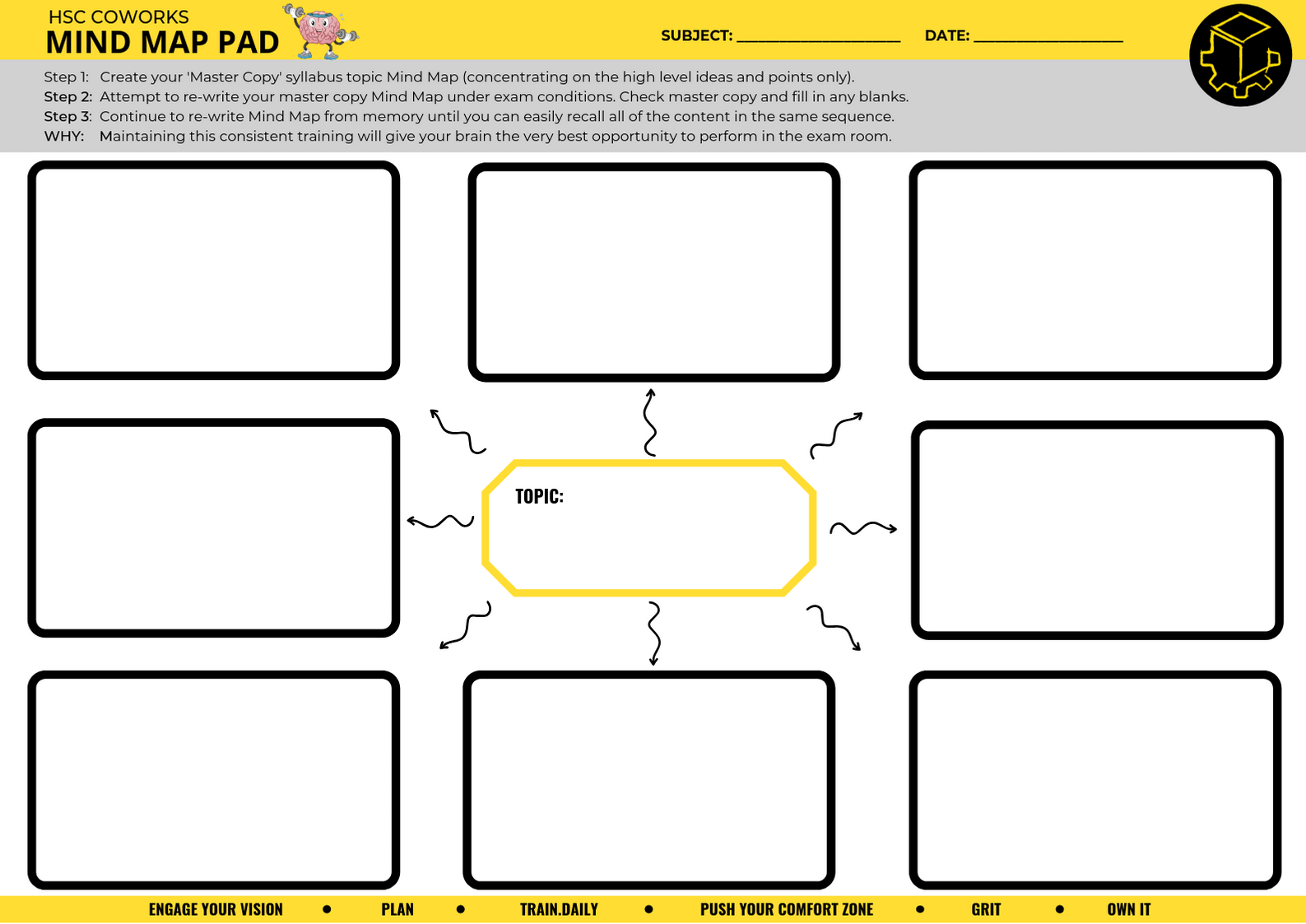
✅ Active recall – Testing yourself rather than passively reviewing notes (we love daily training using Mindmaps)
✅ Past papers – Doing timed exam questions
✅ Focused study blocks – Short, intense sessions instead of all-day “grinding”
✅ Fixing weak areas – Spending time on what you DON’T know, not what you do
This one shift will save you hours and make your study actually count.
3. ‘Declutter Your Study Life’
When everything feels urgent, it’s easy to feel paralysed and do nothing. That’s why decluttering your study life is essential.
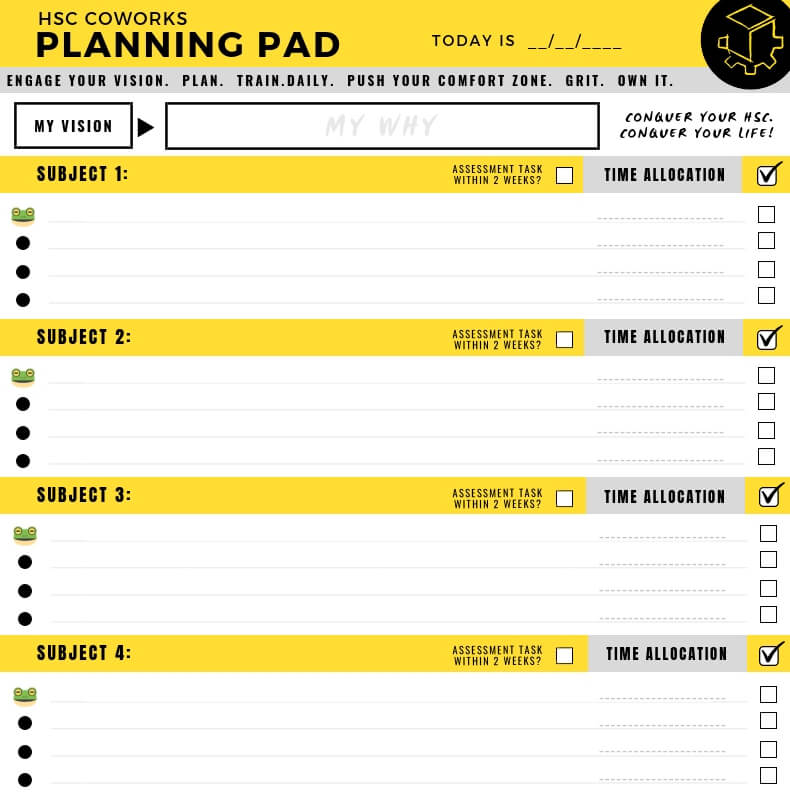
Brain Dump Everything – Use the HSC CoWorks Planning Pad to write down ALL the tasks you need to do. Getting them out of your head makes them feel less overwhelming.
Sort by Priority – Not everything matters equally.
- Urgent & Important → Do these tasks first (Eat Frogs First). These are likely to be the tasks you least want to do which is another reason why you should do them first.
- Important, Not Urgent → Plan these into your week allocating specific time periods to each task.
- Not Important, Not Urgent → Move to the bottom of your list
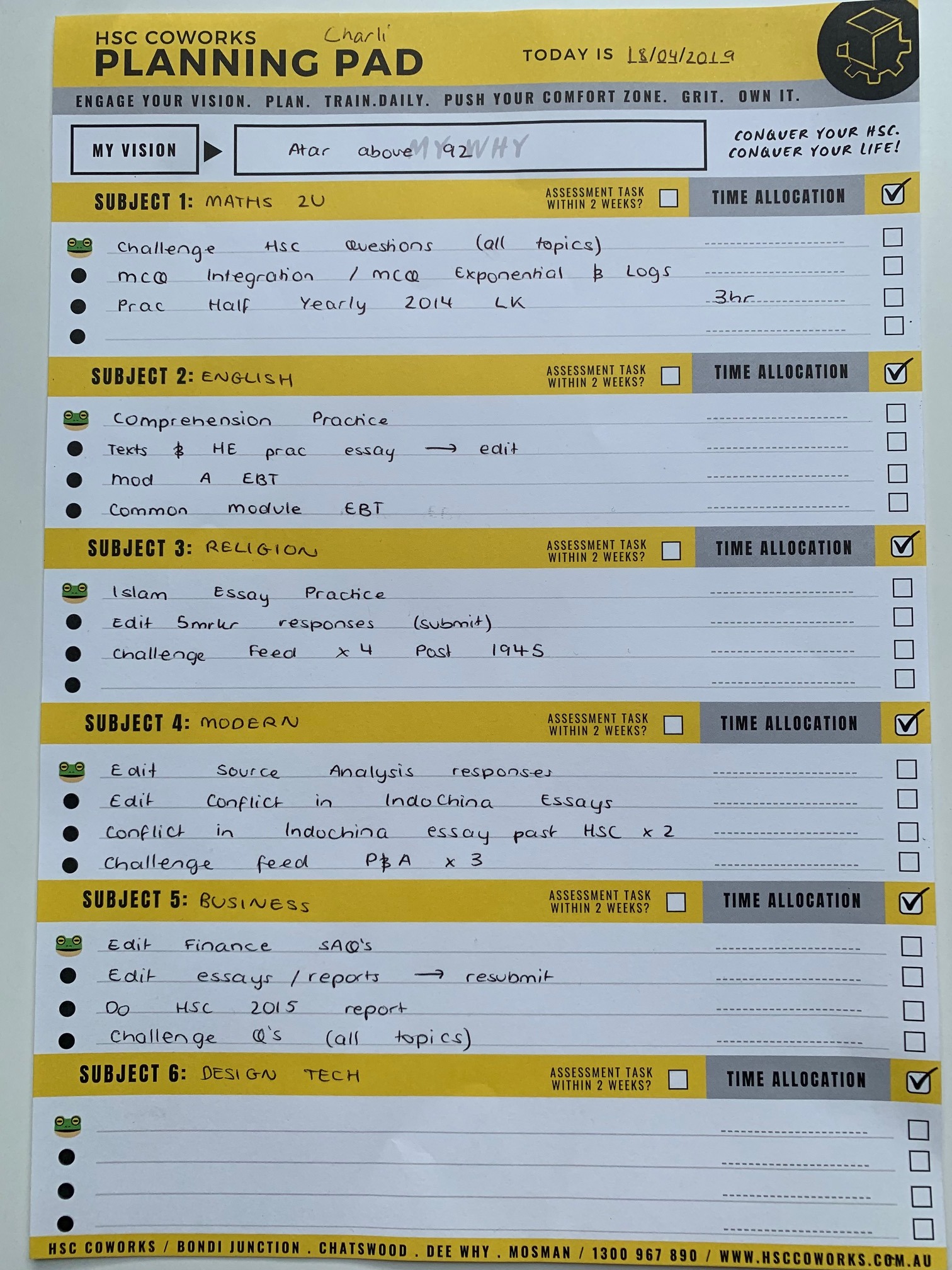
Pick Your Top 3 for the Day – Each day, focus on just three high-impact tasks. Once you finish those, you’ve won the day and time leftover can be spent making your way further down your list of tasks.
This method helps you stop feeling lost and start moving forward with clarity, ticking tasks off your CoWorks Planning Pad.
Celebrate the Wins – Don’t just focus on what you haven’t done, take the time to recognise how much you have already done. This simple task will motivate you to keep going.
✔ Tick off tasks on your Planning Pad → Seeing progress keeps you going
✔ Reward yourself → Give yourself small breaks or treats (social scrolling, video games, walk with friends etc).
By shifting your focus to progress, not perfection, you’ll feel more in control.
4. Use the 30-Minute Rule to Break Procrastination
The hardest part of study is starting. If you keep putting things off, use the 30-Minute Rule:
👉 Tell yourself you’ll put your phone away and do high impact study tasks for just 30 minutes.
👉 Start the 30 minutes by reminding yourself of your “WHY’. What is at the end of your HSC? What are the goals you want to achieve? What are the benefits of finishing your HSC with no regrets?
Once you begin, you’ll often keep going naturally—because the hardest part is getting motivated and getting started.
In summary, it might feel like you’re behind and have way too much to do, but the truth is at this stage of the HSC Year there’s still time to turn things around. The students who achieve their goals in the HSC aren’t the ones who “had it all together” from the very start—they’re the ones who took control when it mattered most.
Start today. One task at a time. One win at a time. You’ve got this. 🚀