As your child moves from Year 10 to Year 11, they are entering a pivotal stage in their academic journey. Year 11 is not just another school year—it marks the beginning of their Preliminary HSC coursework and sets the foundation for Year 12.
The shift comes with new challenges, higher expectations, and a faster pace, which can be overwhelming for students who aren’t prepared. As a parent, understanding these changes will help you better support your teen through this transition.
We are here to help as well so don’t hesitate to call one of our friendly team members for instant support and guidance.
FOUR KEY CHANGES IN YEAR 11
1. Preliminary Coursework: The Foundation for Year 12
One of the biggest differences between Year 10 and Year 11 is that students are now working towards their HSC. Although Year 11 results do not contribute to their final ATAR, the coursework is designed to build the skills and knowledge required for Year 12 and in some cases year 11 content will comprise up to 30% of the final HSC exam.
Students will need to engage deeply with their subjects, as the concepts introduced in Year 11 often form the basis of their Year 12 studies. If they fall behind or fail to grasp key ideas, they may struggle in their final year.
2. Less Time to Cover More Content
In Year 10, students often have time to revisit concepts and consolidate their learning. Year 11, however, moves at a much faster pace. The Preliminary course runs from Term 1 to the middle of Term 3 with exams usually placed at the end of Term 3. This means students must absorb and apply new content in a shorter timeframe.
Subjects like Mathematics and Science introduce more advanced theories, while English and Humanities require deeper critical thinking. Time management becomes crucial, as students will need to keep up with coursework while preparing for assessments.
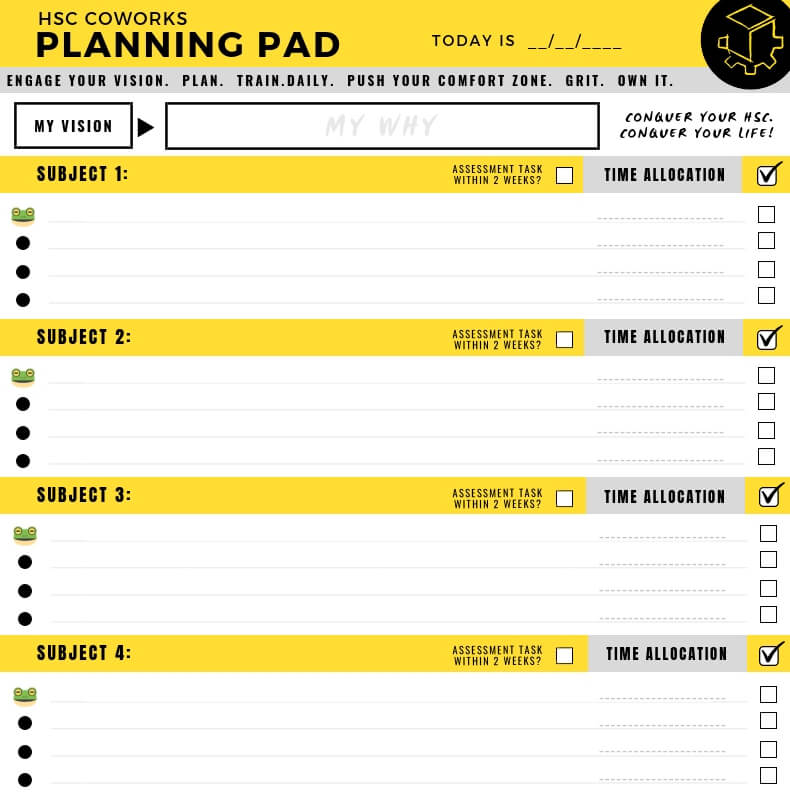
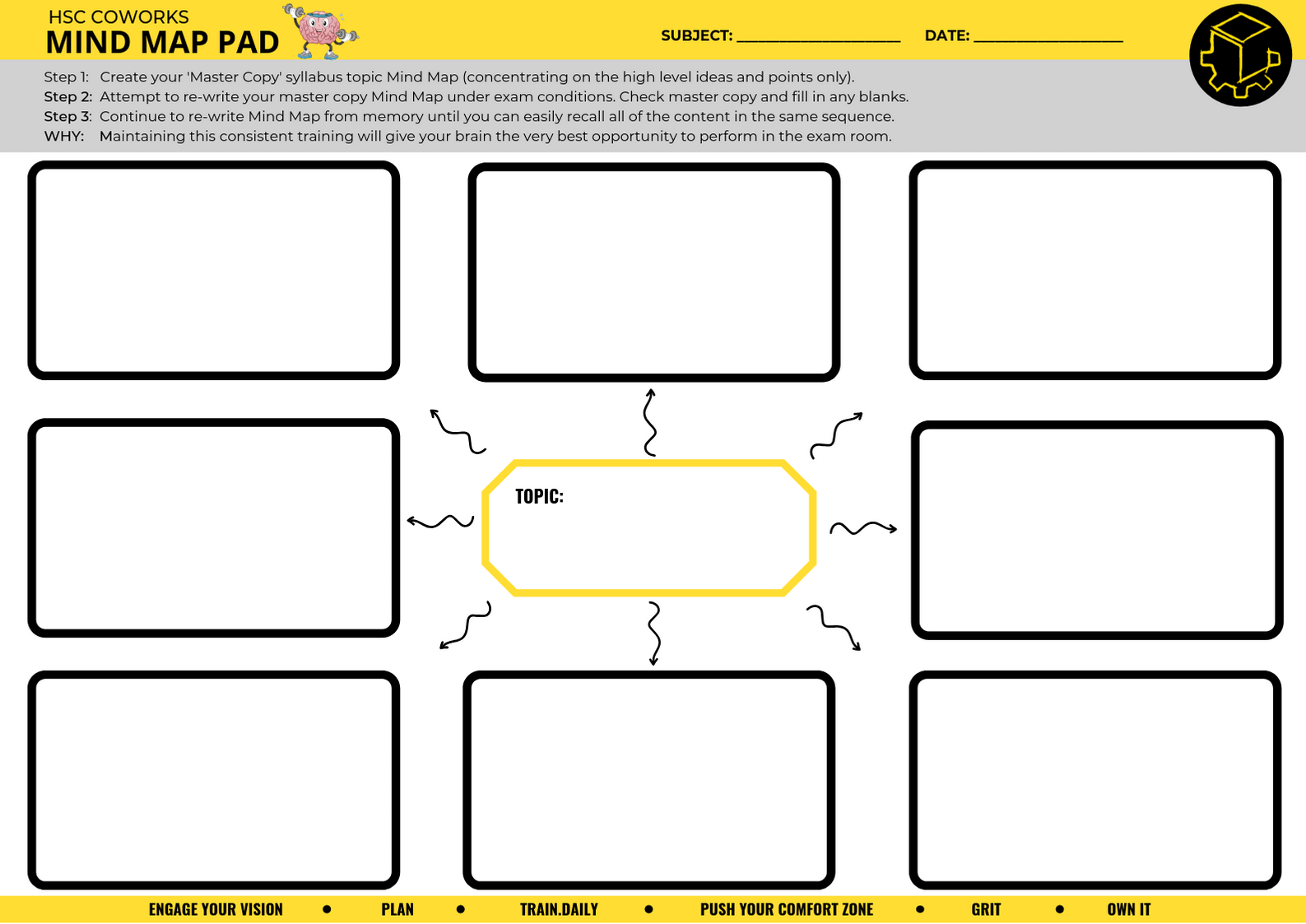
Students can ensure they stay organised by using the HSC CoWorks Planning Pad (download here or call us and we’ll post you a 50 page planning pad at no cost!).
3. Higher Expectations for Written Work
One of the biggest academic leaps is in the level of writing expected. In Year 10, students may have been used to writing short responses or structured paragraphs. Year 11, however, requires them to produce full-length essays—often up to 1000 words—under timed conditions.
Subjects like English, History, and Legal Studies demand well-structured arguments, detailed analysis, and sophisticated writing skills. If your child has struggled with extended writing in the past, now is the time to work on improving their essay skills. Encourage them to practice drafting essays and getting feedback regularly so they can build confidence before Year 12.
4. More Complex Topics and Texts
The content in Year 11 becomes significantly more challenging. In English, for example, students move beyond basic text analysis to exploring deeper themes, literary techniques, and multiple interpretations of a text. They may study Shakespeare, philosophical texts, or complex contemporary issues that require critical thinking and discussion.
In subjects like Science, students will engage with higher-level experiments and theoretical concepts that require a strong understanding of foundational knowledge. Mathematics subjects become more abstract, and Humanities subjects demand more independent research and analysis.
TIPS FOR PARENTS
-
Encourage good study habits: Help your child establish a consistent study routine early in the year. A little bit each day is a better approach than feeling overwhelmed in the days leading up to a due date.
- Support their time management: With multiple subjects and assessments, students need to stay organised. A study planner, diary or CoWorks planning pad will help them track due dates and workload across different subjects.

-
Encourage a structured study environment: A quiet, dedicated space for studying (with no phones!) will help minimise distractions. View our latest blog on top tips for organisation and effective study techniques
-
Promote independent learning: Encourage your teen to seek out extra resources, ask questions, and take ownership of their learning. HSC CoWorks Key Behaviour #6 is Own It and we are big on supporting students to take ownership of their HSC year and taking full responsibility for achieving their goals. It is human nature to allow blame and excuses to takeover sometimes … ‘My teacher doesn’t like me’, ‘I didn’t have enough time’, ‘it’s not fair’, ‘it’s so boring’, ‘I need to finish my notes before I can start the assessment task’. However in life we know that in life there is only one person who can make a goal a reality and that of course is you!
-
Normalise challenges, setbacks and embracing mistakes: The increased difficulty level means they will face academic hurdles. Remind them that persistence and effort matter more than instant success. This is a skill that will serve you well throughout your life. So many students avoid getting feedback on their practice work because they don’t want to hear criticism, however it is this feedback which will move you forward and closer to your goals.