As a parent, it can be frustrating to watch your teen struggle with motivation and organisation. While it’s natural to want to step in, empowering them to take ownership of their learning is key.
These skills are not always focused on at school and many students get to Year 11 & 12 struggling with how to plan their time, get organised (therefore decreasing levels of stress) and stay focused on their goals amidst the endless distractions out there for teenagers! Here are some tips on how you as a parent can support them.
We are here to help as well so don’t hesitate to call one of our friendly team for instant support and guidance.

HSC COWORKS TOP TIPS
1. Support Them to Plan and Organise
By the time a student enters the final two years of school, the amount of school content and subsequent assessment tasks intensifies.. at the very same time as their social calendar increases too! You can support your teen stay on top of their work and reduce their levels of stress by teaching them the skill of organisation. Key points to focus on are;
- Get proactive and break down tasks: Assessment period can be a very overwhelming time and so it is important to break down tasks into more manageable steps and take proactive action towards each task well ahead of the due date. For example if an English essay is due in two weeks, those smaller tasks could look like this; Finish reading the text – Write out the main themes, ideas and techniques – Find your quotes – Write an essay plan – Get feedback on your plan – Write your essay draft – Get feedback on your draft – Submit your essay
- Allocate time across tasks: Time allocation is so important and many students can get caught up on one task for hours, and then run out of time to do anything else. They can also underestimate how much time tasks will take. When planning ahead, set times for each task and stick to them.
- Identify ‘frog tasks’: When planning your time and what tasks need to be done, students must must must start with the task they least want to do “the frog task”. By doing this first they will feel a real sense of achievement getting it out of the way and they are less likely to ‘run out of time’ and ignore it completely.
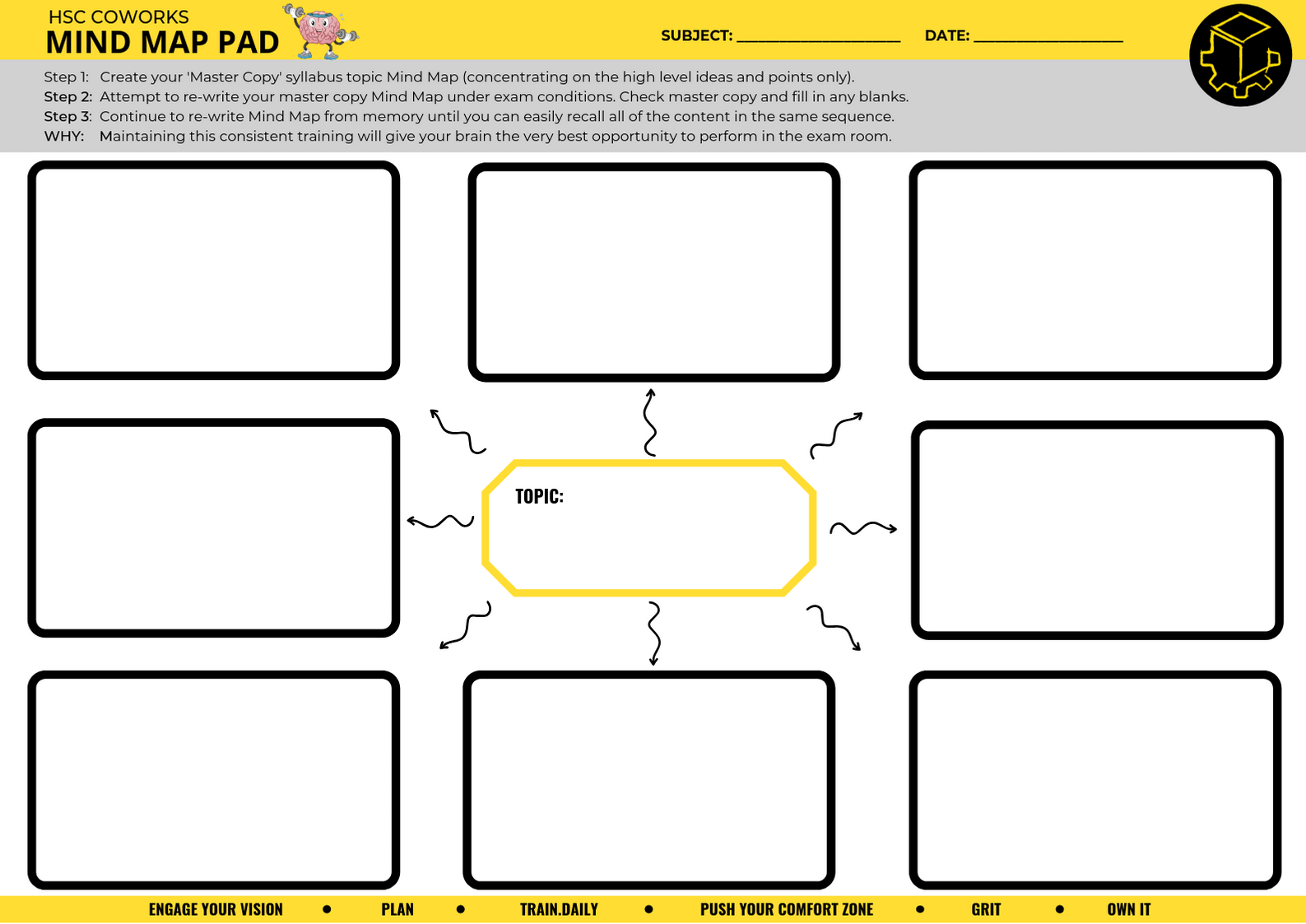
- Effective vs Ineffective Study: Homework, notes and highlighting are all very basic level tasks which must be done but won’t get you the results you want in the exam room. Students must use their precious time efficiently by studying effectively. That means testing the brain around the content under exam style conditions – flashcards, syllabus mindmaps from memory, quote from memory, practice questions, practice essays and finally practice exams.
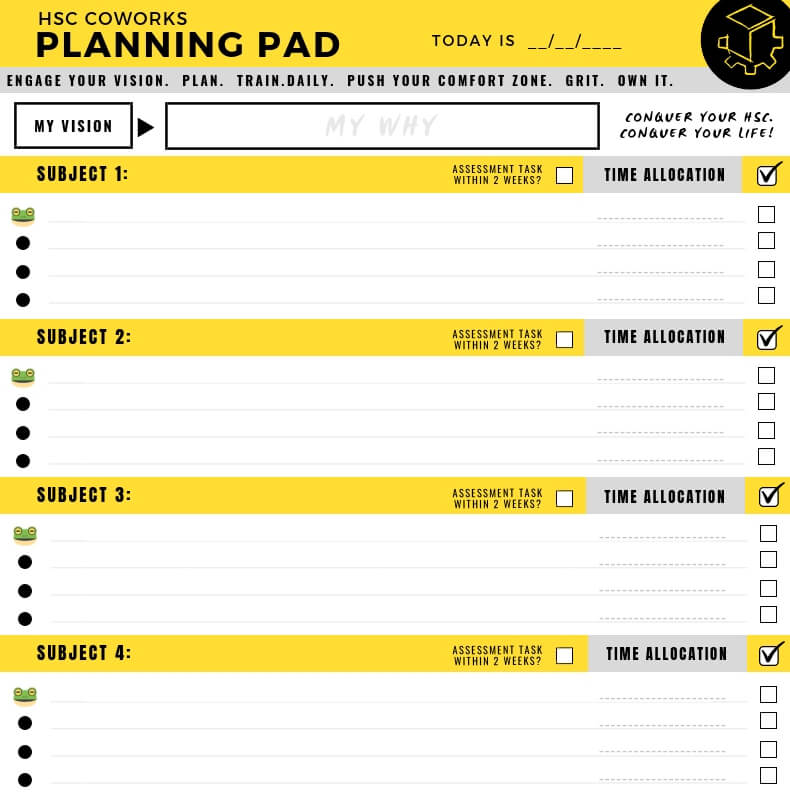
Students can ensure they tick off all of the planning tips above by using the HSC CoWorks Planning Pad (download here or call us and we’ll post you a 50 page planning pad at no cost!).
2. increase motivation – Connect to your “Why”
It’s common for teens to question the relevance of school, especially when they’re passionate about a specific career like fashion design and struggle to see how algebra or history fits into their future. This disconnect can lead to disengagement and a lack of motivation.
So how can you support your child to connect to their why and stay motivated to do the mandatory school work?
- Link Schoolwork to Their Goals
Help your teen see how transferable skills gained at school apply to their interests. For example, mastering maths formulas can enhance problem-solving skills needed for designing patterns or managing finances in their own fashion business. English assignments build communication skills vital for pitching ideas or marketing designs. Showing the real-world applications of their subjects can make learning feel more relevant. - Focus on Building a Growth Mindset
Teach your teen that school isn’t just about memorising facts but about developing resilience, adaptability, and critical thinking—skills they’ll need in any career. Share examples of successful people in their dream field who faced struggles but persevered to achieve their goals, or personal experiences of your own. - Broaden Their Vision
Sometimes, teens focus so narrowly on their future career that they overlook the benefits of being well-rounded. Explain how a strong foundation across subjects can open unexpected doors, help them connect with diverse perspectives, and prepare them for life’s challenges beyond their chosen field. - Make Time for Joy Amidst the Study
The final years of school can be intense, but it’s important to balance the hard work with moments of enjoyment. Encourage your teen to spend time on hobbies, connect with friends, or celebrate milestones, no matter how small. A healthy balance can reduce burnout and help them approach study with a fresh perspective and positive mindset which will keep them motivated to get the work done.
By shifting the focus from “Why does this matter?” to “How can this help me grow?”—and ensuring there’s room for enjoyment—you can guide your teen toward a more meaningful, balanced, and engaged approach to school.
One of our favourite activities to increase a student’s motivation is to have a “Vision Check-in” with them or support them with how to “Build a Vision Board”. Having those motivating ideas, goals, quotes in front of you as your study can make all the difference! Download the HSC CoWorks Vision Board template to help you with ideas (download here)
3. Minimise Distractions
Devices are a common roadblock to productivity. Work with your teen to create a distraction-free workspace. Use tools like app blockers or focus modes to limit social media access during study sessions. Creating regular “tech-free” times as a family can also reinforce this mindset.
At HSC CoWorks, students hand their phone in when they arrive at a session as we know how distracting these devices can be.
For those teens who say that they need their phone for music or for the alarm and that they don’t get distracted, it could be worthwhile sharing some research with them showing that multitasking is a myth—especially for teenagers whose brains are still developing.

Studies highlight the following:
- Cognitive Overload
The brain isn’t designed to handle two high-demand tasks at once. When a teen shifts between studying and checking notifications, their brain must constantly “reset” its focus. This process, called task-switching, decreases productivity by up to 40%. - Impacts on Memory and Learning
A study published in Educational Psychology found that students who used their phones during lectures retained significantly less information than those who didn’t. Similarly, attempting to study while distracted by devices leads to fragmented learning, where teens struggle to connect ideas and retain what they’ve learned. - Teenage Brain Development
The prefrontal cortex, responsible for decision-making, focus, and impulse control, continues to develop until the mid-20s. Teens are especially vulnerable to distractions from devices, as their brains aren’t yet fully equipped to prioritise long-term goals over immediate gratification, like the dopamine hit from a text or social media alert.
A key takeaway on all of this is that your role as parent isn’t to do the work for them, but instead to provide the tools, encouragement, and environment to help them develop these key skills which will set them up for success well after school.
Along the way, encourage your teen to reflect on their approach to study and school, what’s working and what’s not.