So Who Are The Bolsheviks And What Do They Have To Do With Stalin?

Jun 5, 2017

When it comes to studying Russia and the USSR as your national study, you may have already heard the name Stalin thrown around as a prime example of a totalitarian dictator or heard of the Bolsheviks as a revolutionary communist group – but who really were they?
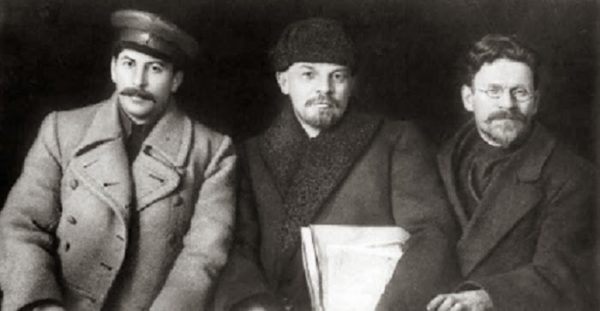
Stalin, Lenin and Trotsky

Let’s start off with the Bolsheviks. The Abdication of Tsar Nicholas Romanov in March 1917 ended 300 years of autocratic rule in Russia, leading the Duma (Parliament) to emerge as Provisional Government. However, they continued involvement in WWI (against popular consensus). Up rose the Petrograd Soviet as an alternative to the Provisional Government, which consisted of 3 groups: Bolsheviks (including Lenin and Stalin), the Mensheviks (Trotsky – later became a Bolshevik) and the Social Revolutionaries. Now we are in a period of dual power between the Proletarian values of the Petrograd Soviet and the Bourgeoisie values of the Provisional Government. The Bolsheviks offered the people “peace, land and bread”, through ending involvement in the war, agrarian revolution and, as the name implies, food for the population. With the proletariat representing the majority of the population, there was an impetus for the Bolsheviks to overthrow the Provisional Government in the 1917 Revolution.This brings us to Stalin. The Bolshevik state under Lenin alluded to a conflict between idealistic notions of Marxist ideology and what was practical for Russia at the time. The Bolsheviks implemented a plethora of reforms including highly progressive Women’s rights, an agrarian ‘land decree’, centralisation of the economy and the use of terror and force to enforce party policy. Stalin, despite strengthening economic control under GOSPLAN and using terror and force as a central component of his political administration, reversed some of the fundamental aspects Bolshevik party’s regime. Stalin advocated enhancing traditional Russian values and notions of family, reversing some of the highly progressive and ideological reforms surrounding women – essentially retreated from the legacy left by the Bolsheviks to create his own Stalinist state. Through introducing the 5 year plans to ‘industrialise, weaponise and consumerise’ in conjunction with collectivisation of peasant farms, Stalin sought to strengthen the global position of the Soviet State as a priority to implementing idealistic notions of Marxist theory.
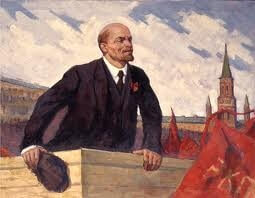
Lenin at the 1917 Revolution: “Peace, Land and Bread”

What Stalin did that Bolsheviks failed to achieve, however,  was to transform Russia from a backward agrarian state into an industrial powerhouse that rivaled the rest of the world. Nevertheless, the Bolsheviks laid the foundations for which Stalin could emerge as a powerful totalitarian figure.

“Let’s Talk About the HSC”

The ultimate podcast for students and parents navigating the journey of the HSC. Presented by HSC CoWorks, each episode dives into the challenges and triumphs of the HSC experience, offering expert advice, study tips, and insights into achieving academic success.

Whether you’re preparing for exams, managing stress, or looking for ways to stay motivated, this podcast is your go-to guide for all things HSC. Join us as we chat with educators, students, and professionals to help you thrive during this important academic milestone!

Instagram

We asked our coaches for their #1 tip to Year 12 students going into Term 2 (term 3 of your HSC year). Here’s what they said 👇
Zara (English): Stop memorising essays.
Alex (Maths): Do past papers with no notes first.
Jack (Economics): Teach a topic. Stumbling = your next study target.
Ella (All Rounder): Know your syllabus inside out.
Which tip will you implement first?
#HSCCoWorks #Term2 #StudyTips #HSCCoaching Year12
Your HSC mountain won’t climb itself 🏔️ 
Daily plan ✅ 
Daily mindmap ✅ 
Daily submission ✅ 
Ask a Coach ✅
Tick them all off and keep that streak alive. 625 days is the record. What’s yours? 🔥
3 mistakes most HSC students make in Term 2…
And yes, you’re probably doing at least one of them.
1. Spending most of your time on subjects you’re already good at. Feels great. Does nothing for improving your end results. Your weakest subject has the most room to move and that’s where the immediate gains are.
2. Saving past papers for the week before trials. Past papers aren’t revision. They’re practice that identify strengths and weaknesses. Do them early enough that you can actually act on what they tell you.
3. Studying more hours but without intention. Re-reading notes. Highlighting. Rewriting summaries for the 4th time. Your brain is comfortable but it is not pushing you into the next level. Active recall and practice questions are uncomfortable for a reason. Get them done every day, not just in the lead up to the assessment. 
Term 2 is where the biggest progress can be made. Small adjustments now = big results in October.
#hsccoworks #hscstudytips #hscmotivation #hsc2026
After working with hundreds of HSC students, we can tell you that the highest achievers are simply following a formula. A simple formula which anyone can follow... 
They’re not necessarily studying 10 hours a day or sacrificing their entire social lives. What sets them apart is a mix of habits, mindsets, and strategies that most students either don’t know about or know about but don’t consistently apply. Here’s what we’ve observed and how you can apply it.
Motivation fades.
Habits don’t.
The students who perform at their best are the ones who train daily, stick to their systems, and keep showing up, especially on the hard days.
P.S. No suffering actually required… just discipline and direction 💪