After working with hundreds of HSC students, we’ve noticed that the highest achievers aren’t always the most naturally gifted. They’re not necessarily studying 10 hours a day or sacrificing their entire social lives. What sets them apart is a cluster of habits, mindsets, and strategies that most students either don’t know about or know about but don’t consistently apply. Here’s what we’ve observed and how you can apply it.
1. They Know Exactly What the Marker Wants
Top HSC students are fluent in the syllabus. They have read it and re- visited it multiple times. They understand that HSC markers are looking for specific things and they reverse-engineer their responses accordingly. Before writing an essay or answering a structured question, they ask: What verb is being used in this question? (Discuss, evaluate, assess, explain — each demands a different response structure.) They consult the NESA marking guidelines from past papers and align their answers to what actually earns marks. Read our earlier blog on how to use the syllabus to maxiomise your study here.
2. They Practice Under Exam Conditions
There is a significant difference between studying content and practicing performance. High achievers regularly sit timed past papers under real conditions. No notes, no phone and strict time limits. They do this not just to test knowledge, but to build the exam-specific skills of time management, pressure tolerance, and structured thinking under constraint. If you’ve never written a full English essay in 40 minutes under exam conditions before your trials, you’re going into the exam underprepared, regardless of how much content you know.

3. They Seek Feedback Relentlessly
High-achieving students get regular feedback from their teachers (and HSC CoWorks Markers). They submit draft responses and ask for detailed feedback throughout the year, not just in the lead up to an exam. They ask ‘What would make this a Band 6 response?’ and go back and forth with a marker, rather than just accepting a first draft mark.
4. They Study With Others.. Strategically
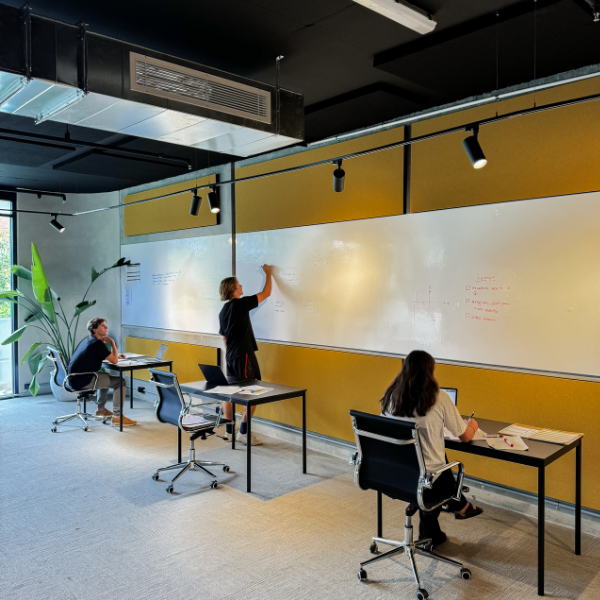
At HSC CoWorks, this is exactly what our coaching sessions are designed to facilitate.
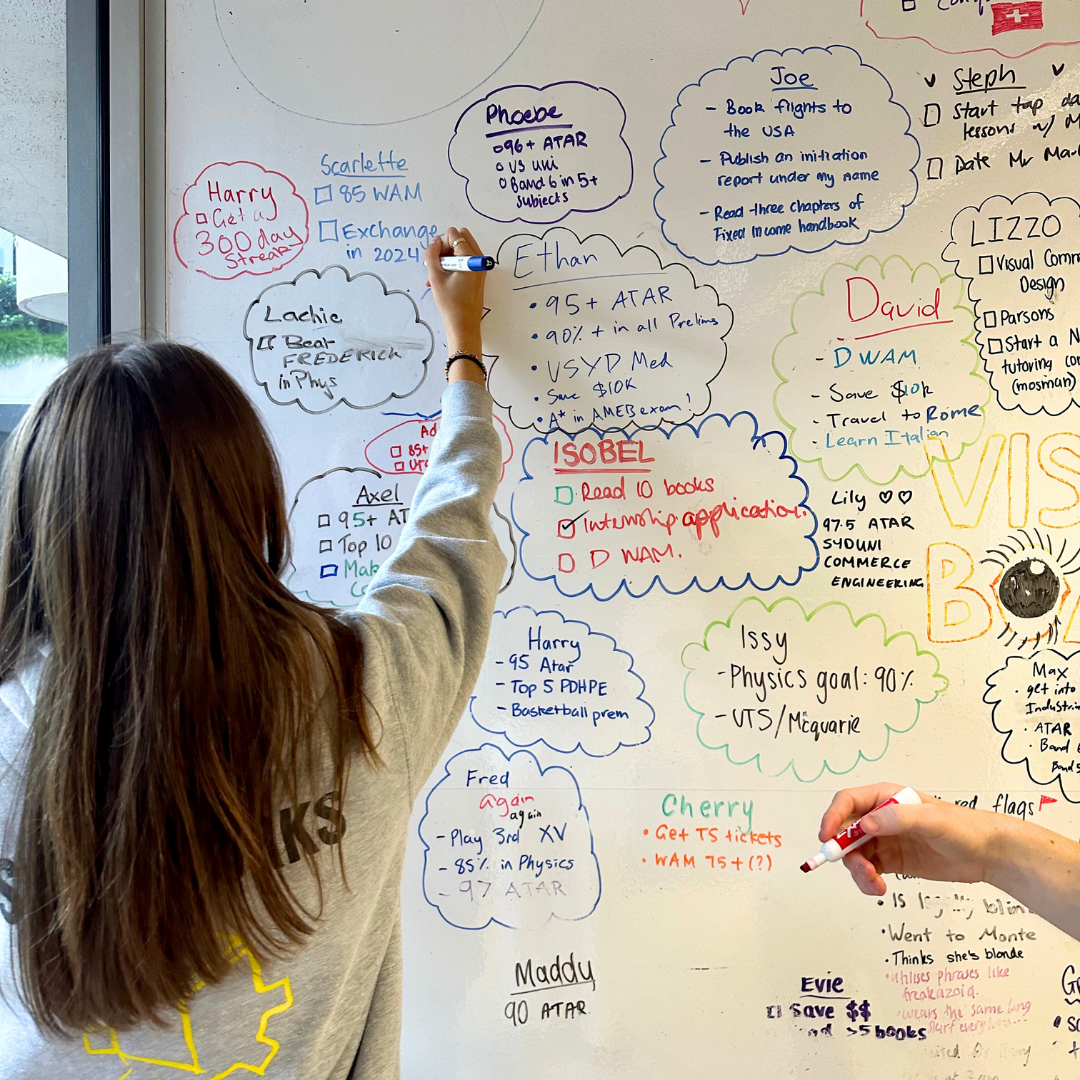
Students aren’t sitting around passively, instead they’re actively working in a high-performance environment where collaboration has purpose. They’re brainstorming ideas, unpacking difficult concepts, and mapping clear next steps with guidance from coaches. Through Teach-a-Coach, students explain their thinking out loud, which is one of the most powerful ways to deepen understanding and identify gaps.
They also benefit from being surrounded by other motivated students. Even when working independently, that shared focus creates a productivity zone that is incredibly difficult to replicate at home.
5. They Protect Their Energy, Not Just Their Time
High achievers understand that cognitive performance is a function of energy management, not just hours logged. They prioritise sleep, take real breaks, and maintain at least one or two activities outside of study that they genuinely enjoy. They are not always ‘on’.
The student who studies 4 focused hours and sleeps 8 will often outperform the one who grinds 9 hours on 5 hours of sleep.

Sarah Gardiner
Business Manager HSC CoWorks