
Effective note-taking is an essential skill for successful HSC students.
Whether in the classroom or at home, developing a system for taking and organising notes is crucial to exam preparation. Here are some tips for writing effective notes that will support you in preparing for the exam room.
Use a structured format
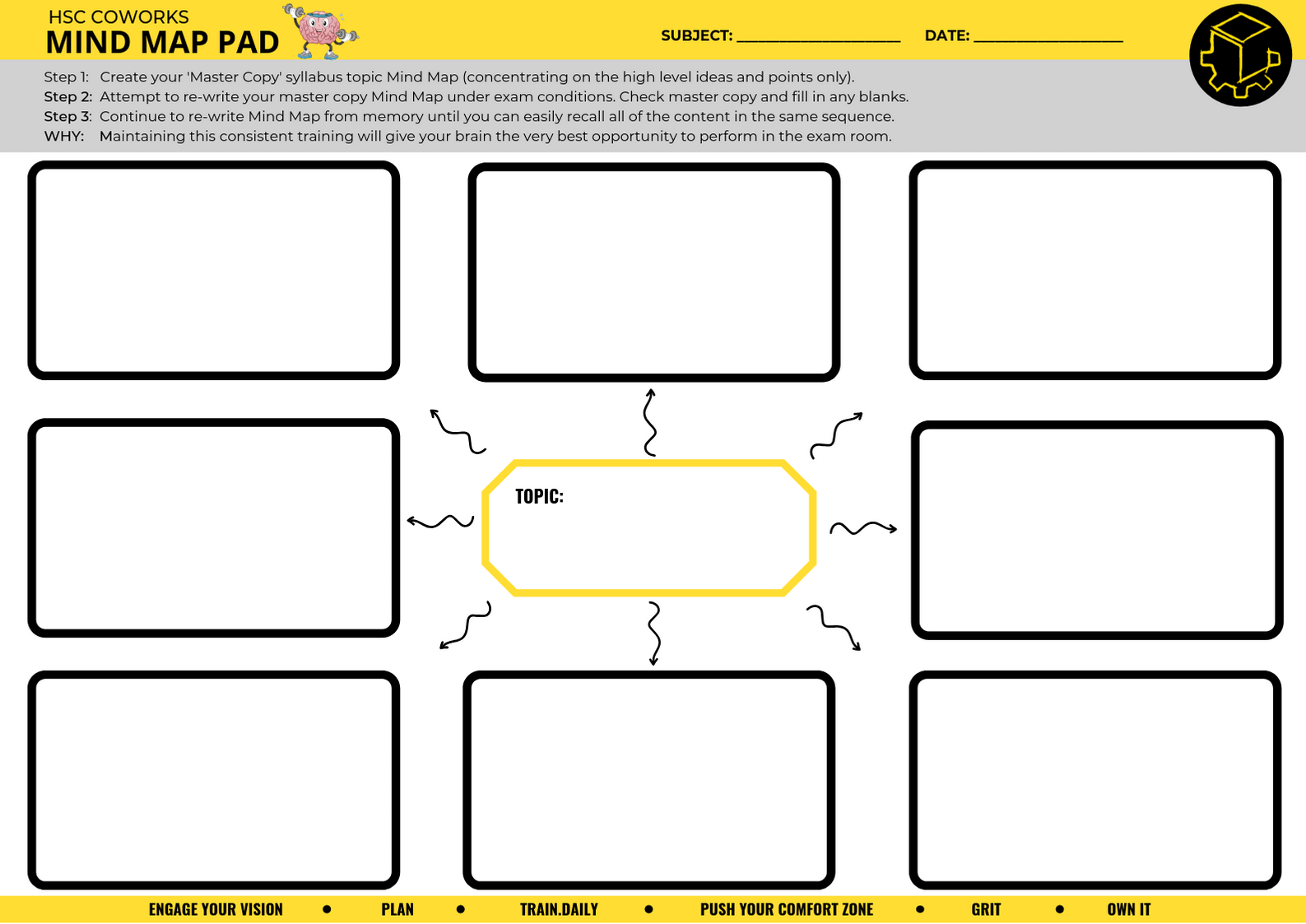
Organise your notes by topic and subtopic, using headings, bullet points, and numbered lists. This structure will make it easier to read and review your notes, helping you to remember and understand the material. Using tools such as mindmaps are a fantastic way to organise notes and create a ‘map’ for your brain to follow. Mindmaps also ensure that you keep your notes concise (see next tip).
Keep it simple
Use clear and concise language, abbreviations, acronyms and symbols to reduce clutter and make your notes easy to read and understand. Avoid copying long passages from textbooks and instead, summarise important points which are directly correlated to the subject’s syllabus dot points.
Focus on key concepts
Identify the most important concepts and ideas, and highlight them in your notes. These are the topics that are outlined in your subject’s syllabus document and are what you will be tested on, so make sure you have a clear understanding of them.
Test yourself!
It is very easy to get distracted when completing a task such as note-taking. To ensure that you are hard-wiring the information we recommend that you test yourself by covering your notes/mindmap and writing out as much as you can remember. It might not be much on your first attempt but keep at it and over time your brain will be able to recall more and more information.
Make sure that you have understood concepts, formula and topic notes by attempting practice questions as you go.
Review and Revise
Regularly review your notes, not just in the lead up to an exam. Identify areas where you may need additional clarification or practice, and revise your notes accordingly.
Effective note-taking requires practice and patience, but the benefits are worth it. By developing a system that works for you, you’ll be able to retain more information, better understand complex concepts, and prepare for your exams with confidence. Remember, effective note-taking is not just about capturing information; it’s about organising and reviewing that information to support your success in the exam room!
Good Luck!