As parents, we want to see our child be motivated to study and put in the required work for Year 11 & 12. We want them getting started without being asked (or nagged!) and we want them taking pride in their work. But many students say the same thing:
“I just don’t feel motivated.”
And parents often ask us:
“How can we motivate them?”
Here’s the truth that might surprise you.
Motivation is not something you wait for. Motivation is something you create.
And almost every student can become motivated when three key conditions are in place.
1. A Clear Vision of the Future
Students who are motivated usually have something pulling them forward. It might be:
-
A university course they want to get into.
-
A career they’re excited about.
-
The feeling of making themselves and their parents proud.
-
The satisfaction of achieving something difficult.

When a student can see where they are heading, putting in the hard work to get there makes sense.
Instead of thinking:
“Why do I have to study this?”
They start thinking:
“This is helping me get where I want to go.”
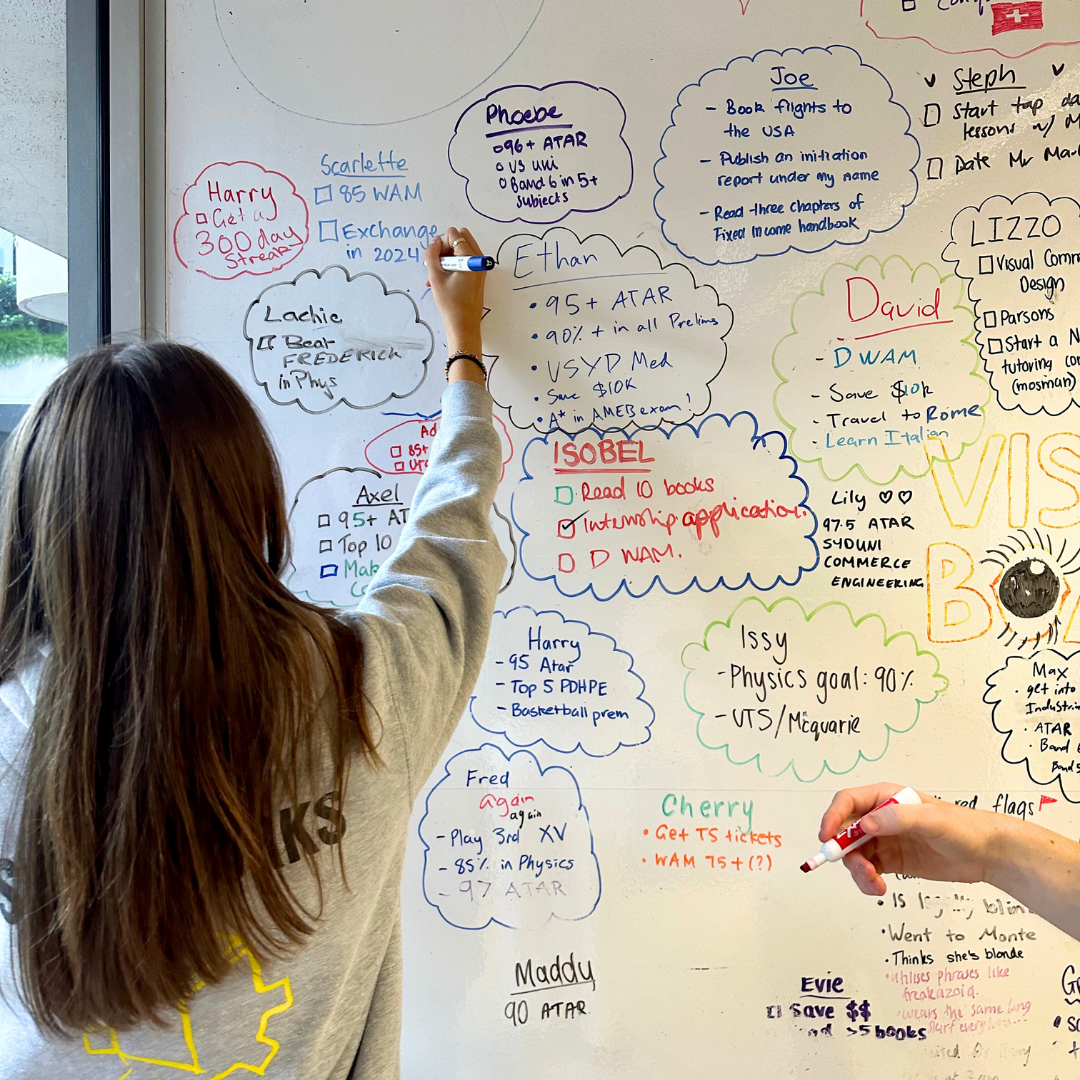
At CoWorks, we call this Engaging Your Vision.
Students who regularly connect with their vision naturally develop more energy, focus and determination. Without a vision, motivation quickly fades.
2. A Clear Plan
Even when students want to do well, many feel overwhelmed because they don’t know where to start. The HSC can feel like a mountain with;
-
Multiple subjects
-
Ongoing assessment tasks
-
Large syllabuses
-
Exams months away
When students don’t have a clear plan, their brain often chooses the easiest option: avoidance. But when a student knows exactly what to do next and has broken down subject tasks, motivation becomes much easier.

For example, instead of thinking:
“I should probably study English.”
An organised student will:
-
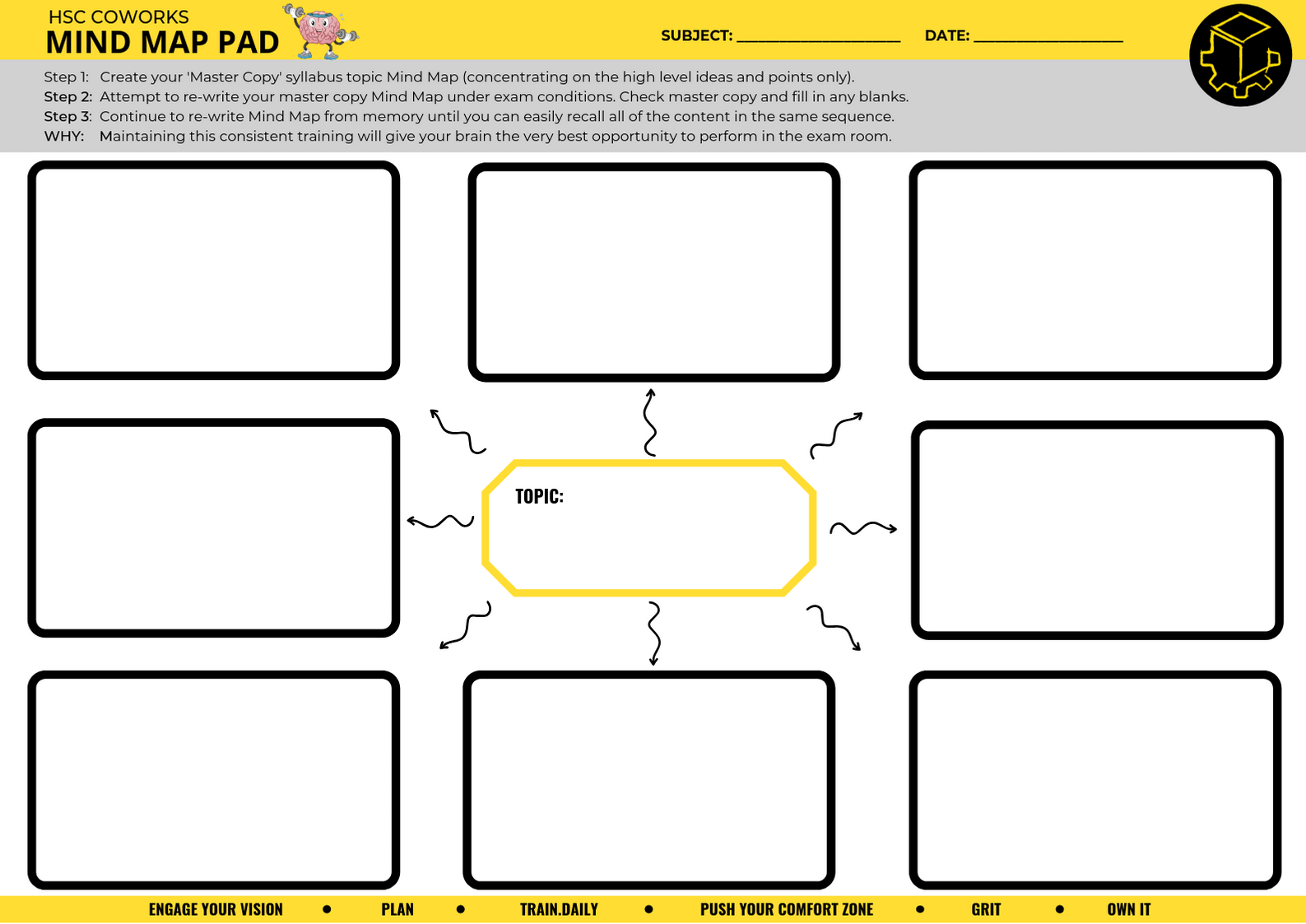
Complete one mind map from memory
-
Review 10 flashcards
-
Rewrite one paragraph of an essay
Small, clear actions create momentum.
And momentum maintains motivation.
3. Daily Progress
One of the most powerful drivers of motivation is progress.
When students feel like they are improving, their confidence grows. And when confidence grows, motivation follows.
Students who train their brain daily often start noticing things like:
-
They remember more in class
-
Their essays improve
-
Tests become easier
-
Teachers recognise their effort
Each small win reinforces the belief:
“This is working.”
And that belief fuels more effort and maintains motivation.
When these three things are in place, a clear vision, a clear plan, and consistent daily progress, motivation becomes much easier.
Students stop waiting to feel inspired.
Instead, they begin moving forward.
And as they start to see progress in their work, something amazing happens: their confidence grows, their effort increases, and the cycle of improvement and ongoing motivation begins!

Sarah Gardiner
Business Manager HSC CoWorks