As a parent, it can be difficult to know whether your teenager is on track for the HSC.
You might see them sitting at their desk for hours, writing notes or telling you they have “nothing due this week”. But what does effective HSC preparation actually look like?
At HSC CoWorks, we’ve spent more than 30 years helping students navigate the HSC. One thing we know is that strong results rarely come down to simply working longer hours. There is well intentioned and ineffective study , or well intentioned and effective study and here are five study habits parents can look out for…
1. Waiting Until an Assessment or Exam Is Close Before Starting
One of the biggest HSC traps is allowing an upcoming deadline to determine when study begins. If your teen suddenly becomes extremely busy in the week before an assessment or spends the days before an exam cramming, they may be working hard but they’re working reactively.
The HSC is a marathon, not a series of last-minute sprints. At HSC CoWorks, we encourage students to think of themselves as being in training for the HSC. Just like an athlete doesn’t begin training the week before competition, students need to continually build their knowledge, skills and exam fitness throughout the year with proactive preparation.
What parents can look for: Is there consistent work happening each week, even when there isn’t an immediate deadline?
2. Not Knowing What They Need to Do This Week
Ask your teenager:
“What are your priorities this week?”
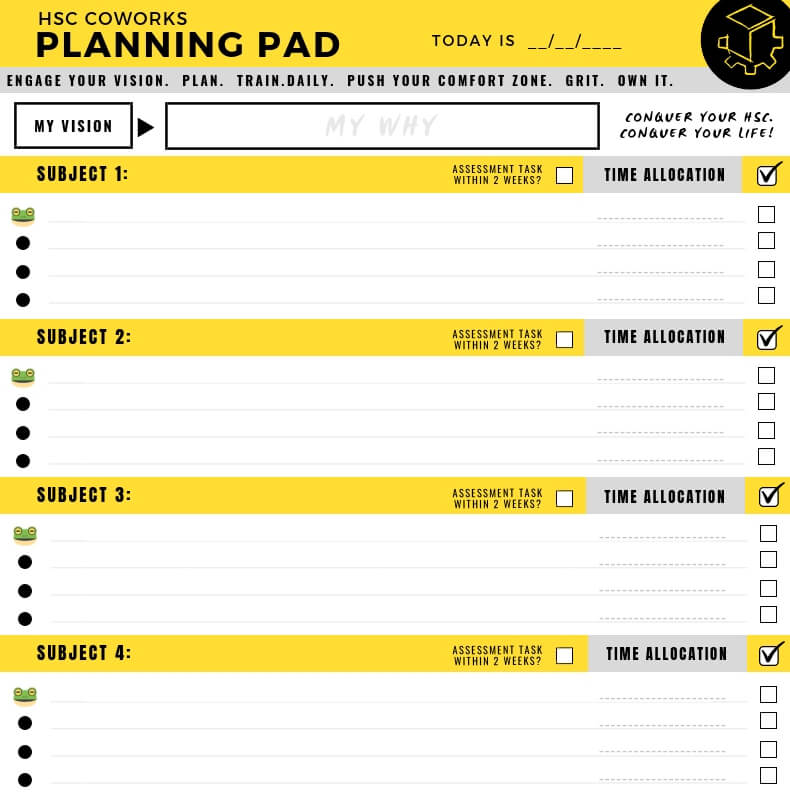
If the answer is “I don’t know”, “just homework” or “I’ll see what I have due”, there’s probably an opportunity to improve their planning. With five or six subjects competing for attention, HSC students need to continually decide where their time will have the greatest impact.

That’s why planning and prioritisation are such an important part of the HSC CoWorks Program. Students are supported to identify upcoming assessments, gaps in their knowledge and the tasks that will move them forward.
The goal isn’t for a coach or a parent to organise everything for them. It is to develop a student who can increasingly answer: What do I need to do next, and why?
That independence is one of the most valuable skills students can take from their HSC year into life beyond school.
3. Spending Hours Making Notes, But Not Testing Themselves
This is one of the easiest traps for parents to miss because it looks like effective study.
There are pages of notes. Highlighters everywhere. Maybe even a colour co-ordinated folder. But the exam won’t test you on how beautiful your notes look!
The question is, can they actually retrieve that information without looking at their notes and can they apply it to an HSC style question?
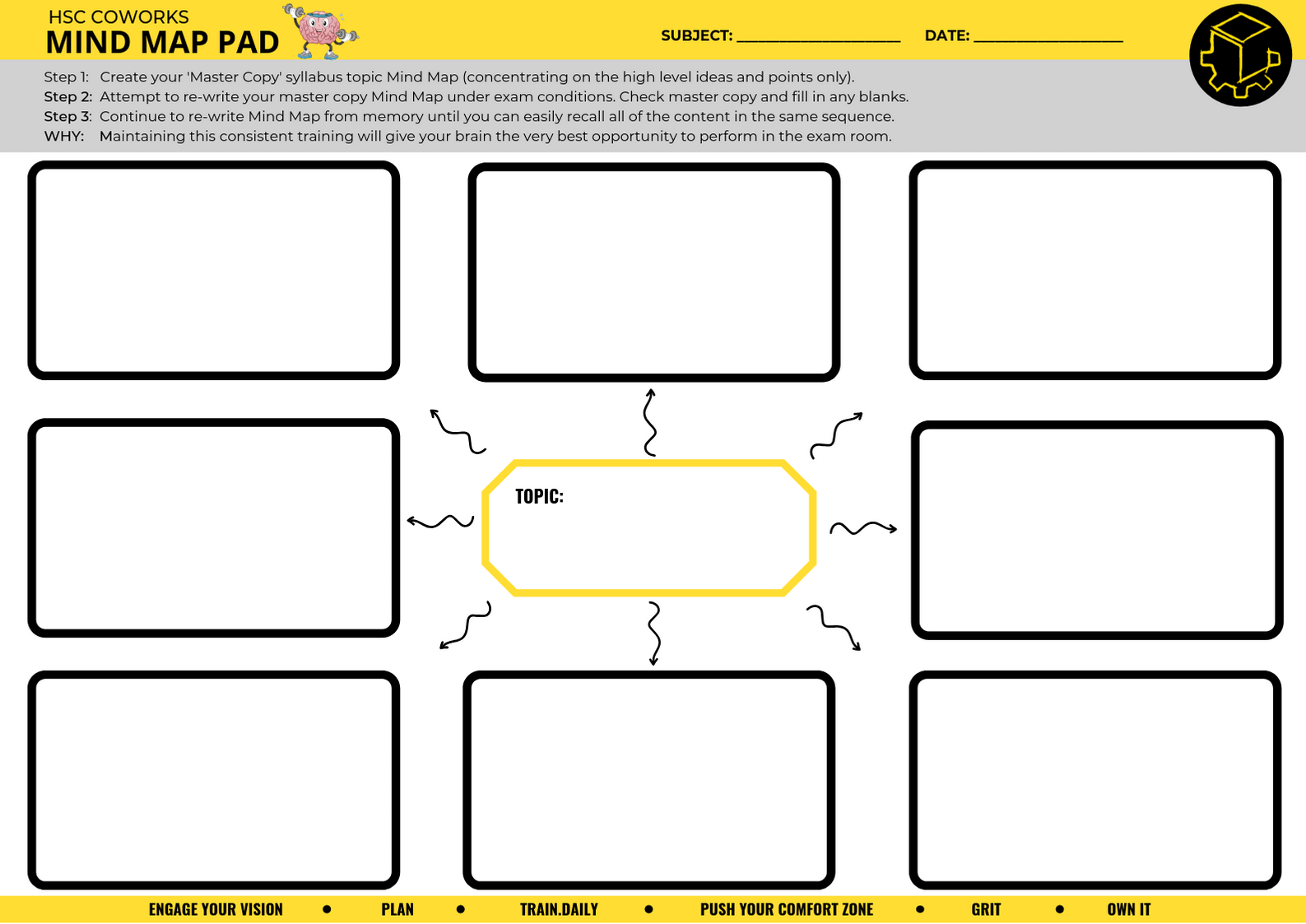
At HSC CoWorks, we encourage students to move beyond passive study and into active training: recalling content, answering exam-style questions, completing timed work and getting feedback on their responses throughout the year, not just in the lead up to an exam.
A useful question for parents is:
“What have you tested yourself on this week?”
Another great way to support your child is to ask them to teach you what they are learning in say ‘Operations, Business Studies’. If it comes easy to them then they are showing they can easily retrieve the information and that they understand it.
4. THEY Always Choosing the Work They Feel Comfortable Doing
We all prefer doing things we’re good at.
For an HSC student, that might mean spending another hour on Maths while avoiding an English essay. Revising familiar Biology content instead of tackling the topic they don’t understand. Or organising notes instead of attempting the practice paper they’re worried about.
At HSC CoWorks, one of our key behaviours is to Push your Comfort Zone. The work students least want to do is often the work that offers the greatest opportunity for improvement.
What parents can look for: Is your teenager regularly working on their weakest areas, or are they repeatedly choosing the tasks they already feel confident completing?

5. Completing Practice Questions Without ANY Feedback
Doing practice questions is important. But the real improvement often happens after the question has been completed. Students need to understand:
- Where did I lose marks?
- What was the marker looking for?
- What could I have done differently?
- How will I apply that next time?
This feedback loop is a major part of HSC preparation.
Through HSC CoWorks, students can complete exam-style questions, work with their coaches and access feedback from experienced HSC markers. The goal isn’t simply to complete more questions. It’s to continually improve the quality of the next response.
That process of attempt, feedback, adjust, repeat is how students build exam confidence.
Strong HSC preparation doesn’t need to mean studying every waking hour. It means consistently doing the right work:
At HSC CoWorks, our role is to help students build these behaviours throughout their HSC journey, while providing the coaching, accountability, resources and expert support they need along the way.
And importantly, the goal is to develop confident, independent students who know how to take ownership of their HSC and have strong lifelong skills to take with them into the next stage of life.
More from the Blog…

2 Weeks Until Year 11 Final Exams: 4 Steps to Exam Prep Success
There are just a few weeks until Year 11 final exams begin and that might feel like plenty of time, but the final weeks before exams disappear quickly. Between school, assignments, sport, work and everything else going on, it’s easy to keep telling yourself you’ll...

Post Trials Slump 2026
How to Reset and Finish Your HSC Strong For many Year 12 students, the 2026 Trial HSC exams have either just wrapped up or are fast approaching. And when they finish, it can feel like you’ve just climbed one of the biggest mountains of your school career. Months of...
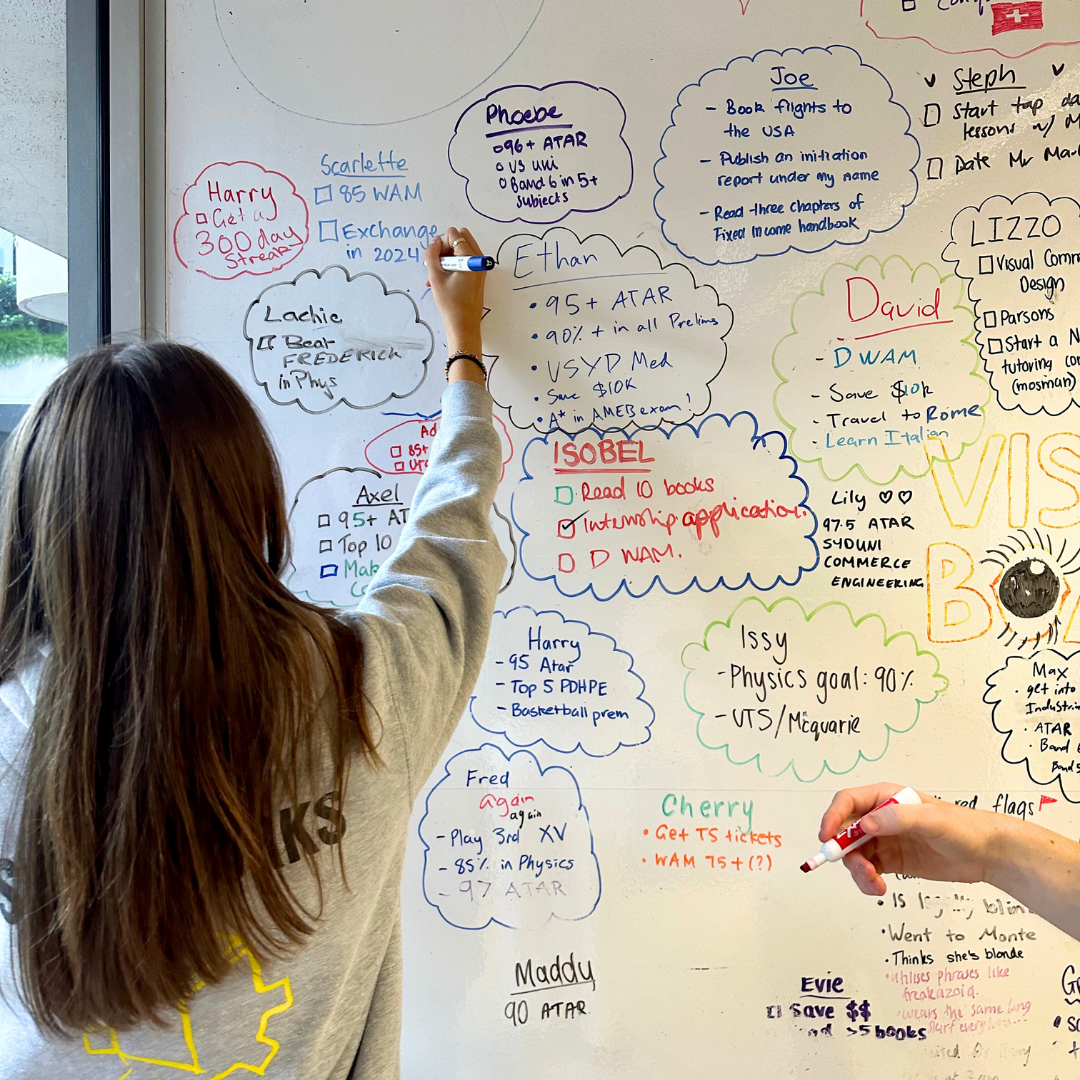

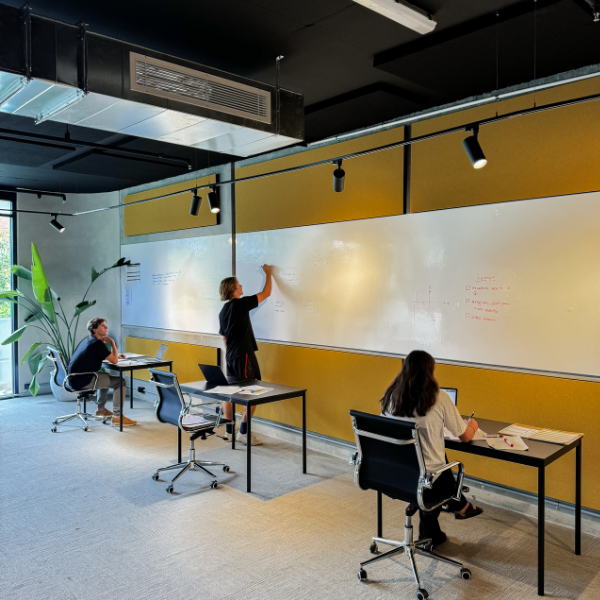

The HSC CoWorks program is designed to cultivate skills that extend far beyond the HSC, setting you on a trajectory for success in both your HSC and life after school. Develop critical thinking, time management, and resilience that lasts a lifetime.
We liken the challenge of the HSC to climbing a mountain, Mount HSC©, and through the consistent application of key behaviours all the way to the top of the mountain students will conquer their Mount HSC.