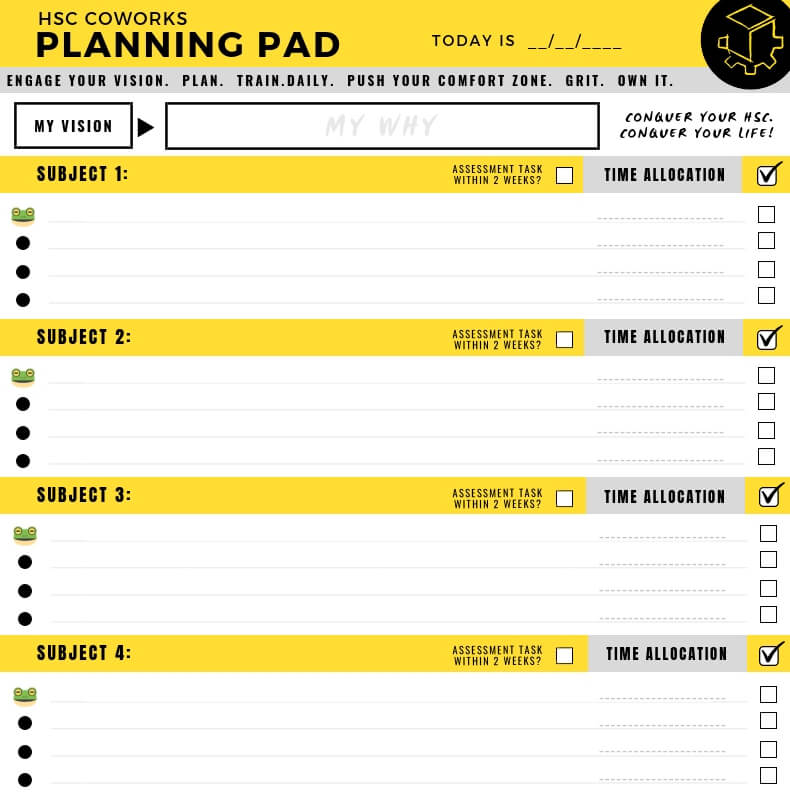
It’s easy to get excited about creating a new study plan. Colour-coded timetables, perfectly balanced subject blocks, and a hopeful mindset that “this time will be different”. But often, after a week or two, that shiny plan is abandoned while old habits creep back in.
Why does this happen? Because most study plans are too general and focus on what to do, but not how to motivate yourself to do it.
A plan without motivation is just a list of good intentions.
Here are our Top 8 Tips for creating a study plan that’s both practical and motivating…
1. Motivate Yourself by Connecting to Your ‘Why’
Before you start planning, ask yourself: Why does this HSC matter to me? What am I doing this for? What lies on the other side of a great HSC result for me?
When you don’t feel like studying, it’s crucial that you re-visit these questions and remind yourself of the goals you have, and the benefits and rewards that lie on the other side of your great HSC result.

Defining your purpose gives you a powerful reason to push through low-motivation days.
-
A specific university course?
- Overseas job opportunities?
-
Make yourself and your parents proud of all your commitment and hard work?
-
Is it about proving to yourself that you can overcome challenges?
Write down your reasons and keep them visible. When motivation dips, reconnecting with your ‘why’ can be the push you need to stick to the plan.
2. Be Specific — Vague Plans Kill Motivation
“Study Maths” or “Work on English” is not a plan. It’s a reminder of how overwhelming those subjects feel.
Instead, break tasks down into clear, actionable items:
-
✅ Complete 10 multiple-choice questions on Algebra
-
✅ Write a 300-word introduction for Module A Essay
-
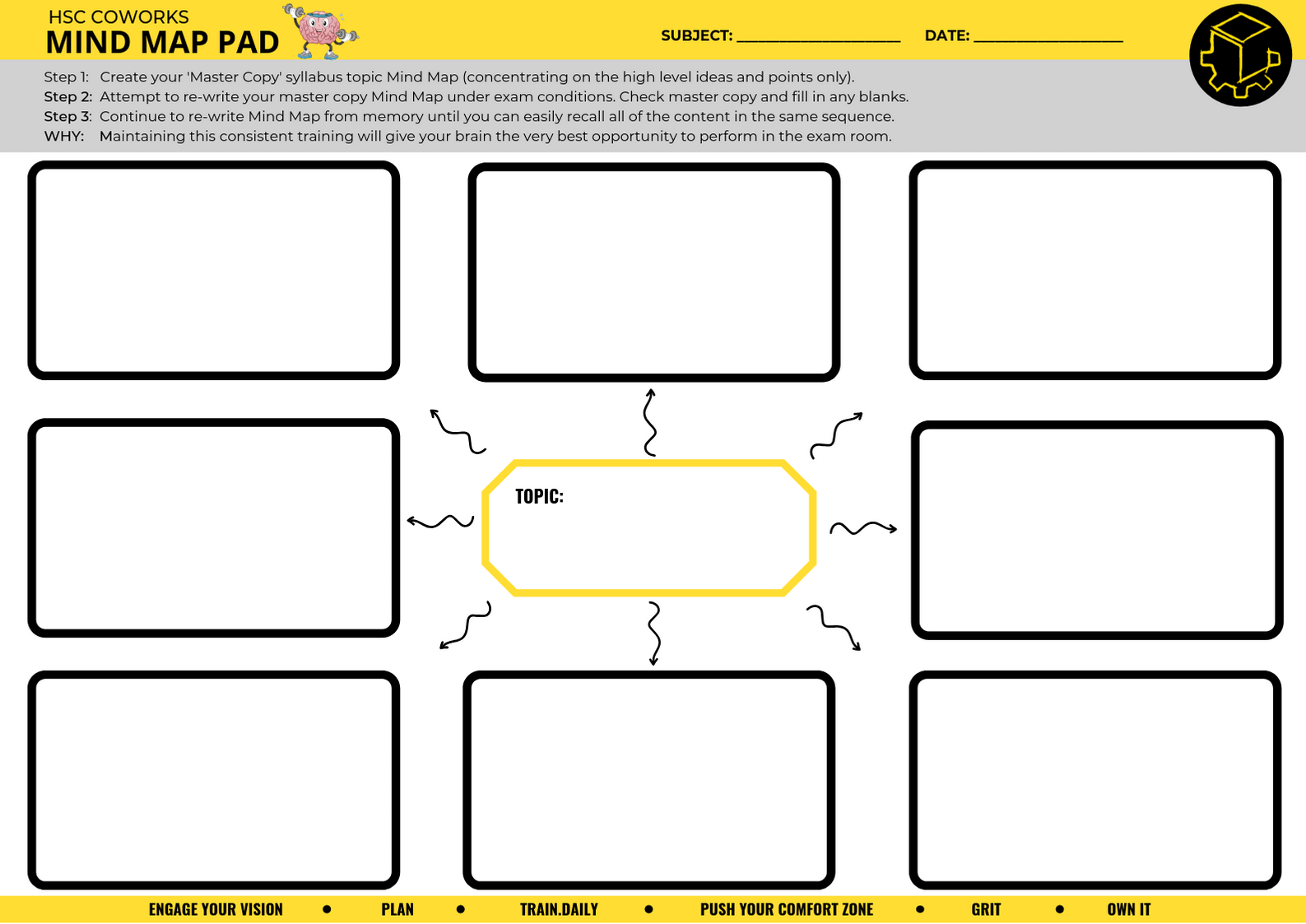
✅ Create a mind map on World War I causes
Specific tasks feel achievable and create a sense of progress. Plus, ticking them off triggers a small dopamine hit that motivates you to keep going.
3. Time-Block and Allocate Realistic Timeframes
Don’t just list tasks — assign them a time and duration.
-
3:30 – 4:00 pm: Complete 5 Chemistry practice questions
-
4:00 – 4:30 pm: Create mind map for Business Studies
This helps you stay focused, prevents sessions from dragging on endlessly, and makes it clear when you might be stuck on a task.
4. Do the Hard Things First — Eat the Frog!
Procrastination thrives when you avoid the uncomfortable tasks. But remember: the tasks you least want to do are usually the ones that will move you forward the most.
Follow the Eat the Frog principle:
-
Tackle the hardest or most dreaded task first each day.
-
Once it’s done, everything else feels easier — and you’ve already had a productivity win.

5. Include Tasks You Don’t Want to Do (And Make Them Non-Negotiable)
Don’t just plan for the tasks you enjoy. Growth comes from tackling weaknesses and from moving outside of your comfort zone.
-
Hate writing essays? Schedule 20-minute of writing or tackle an intro paragraph to a past paper question.
-
Struggle with practice exams? Allocate a weekly mock test session.
If it feels uncomfortable, it probably means you’re working on a skill gap — and that’s exactly where progress happens.
6. Remove Distractions — Protect Your Focus Time
Even the best study plan can be derailed by constant distractions. If your phone is nearby and notifications are pinging, your focus will suffer.
-
Leave your phone in another room or use apps like Forest or Focus Mode to lock distractions.
-
Study in a clean, clutter-free space where everything you need is within reach.
-
Let friends and family know your study times to minimise interruptions.
Protecting your focus time helps you get more done in less time, making studying feel less like a chore. Every phone notification or temptation to check your phone is getting you further and further away from achieving your goals.
7. Look Ahead — Build a Proactive, Not Reactive Plan
Many students fall into the trap of reactive study: scrambling to revise topics only when an assessment is looming.
Flip this approach:
-
Start reviewing topics well before they’re “due.”
-
Use a study calendar to map out key assessment dates and plan backward.
-
Build in regular revision, not just last-minute cramming.
Proactive plans reduce anxiety and help you feel in control.
8. Track Progress and Celebrate Wins (Even Small Ones)
Humans are motivated by progress. That’s why ticking off tasks releases dopamine and feels so good.
-
Track not just what you did, but what you achieved (practice questions completed, topics revised, essays written).
-
Celebrate the small milestones — finishing a tough task, completing a week of sticking to your plan, or hitting a personal best on a practice test.
This reinforces the idea that effort equals progress, which keeps motivation high.
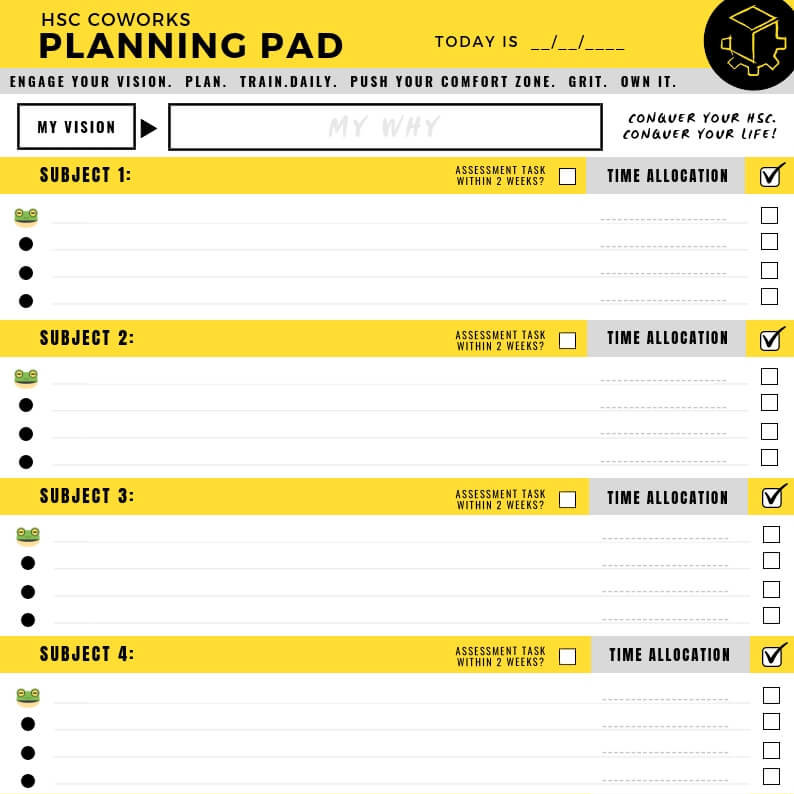
The perfect study plan isn’t the one that looks great on paper — it’s the one that actually gets done.
Start small.
Stay consistent.
Focus on progress, not perfection.
And remember: the discipline you build now won’t just help you conquer your HSC — it will shape the person you become for life and how you tackle all future challenges.